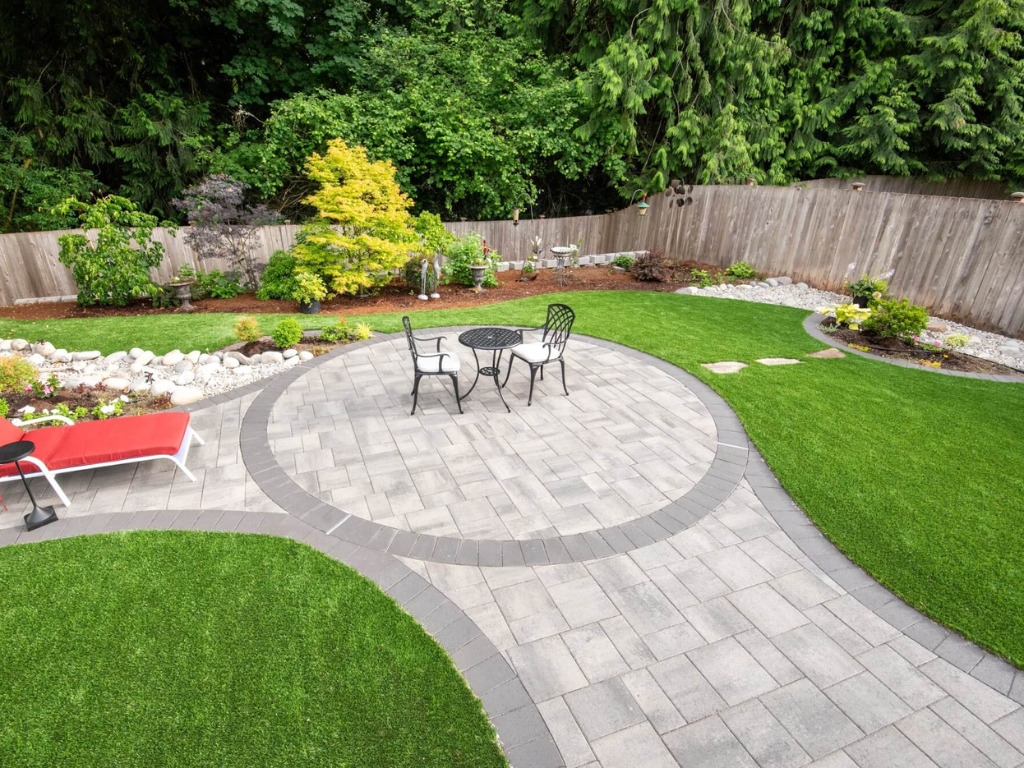
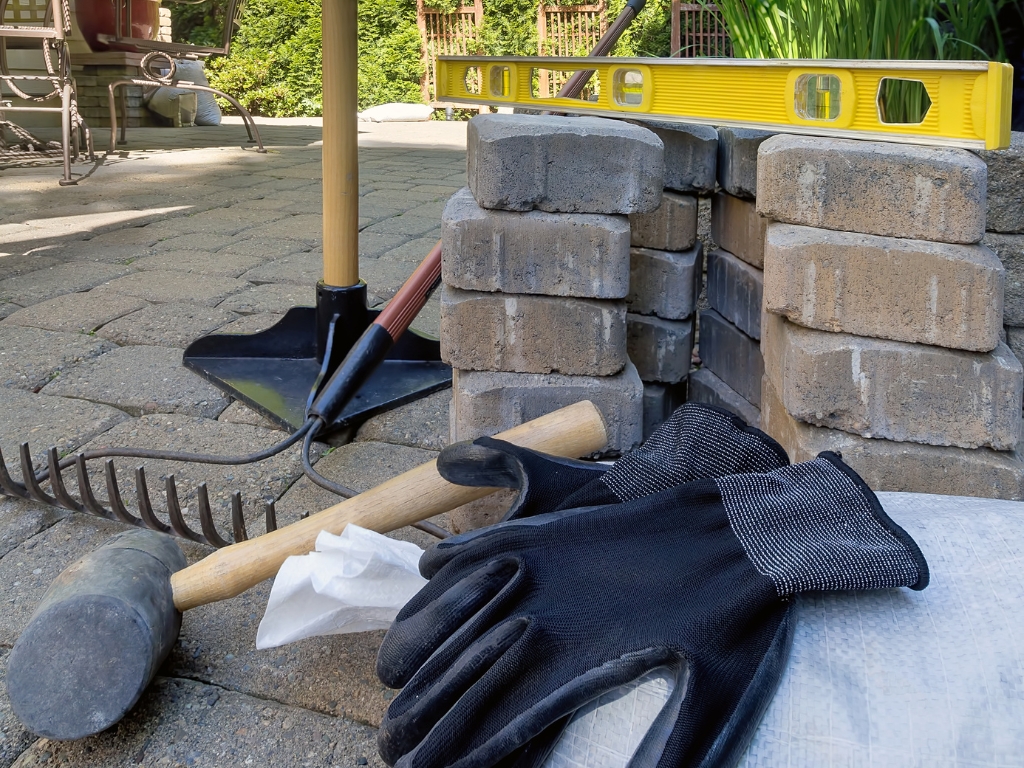
A custom paver patio installation is designed to last for decades, but its long-term performance depends on how it is maintained. Paver systems are flexible by design, which allows them to handle weather changes and foot traffic without cracking. That flexibility also means routine care is required to keep everything working as intended.
This checklist-style guide explains what homeowners should monitor, maintain, and avoid after installation. Each section represents a specific maintenance checkpoint that helps protect the patio’s structure and appearance.
☐ Allow the Patio to Settle After Installation
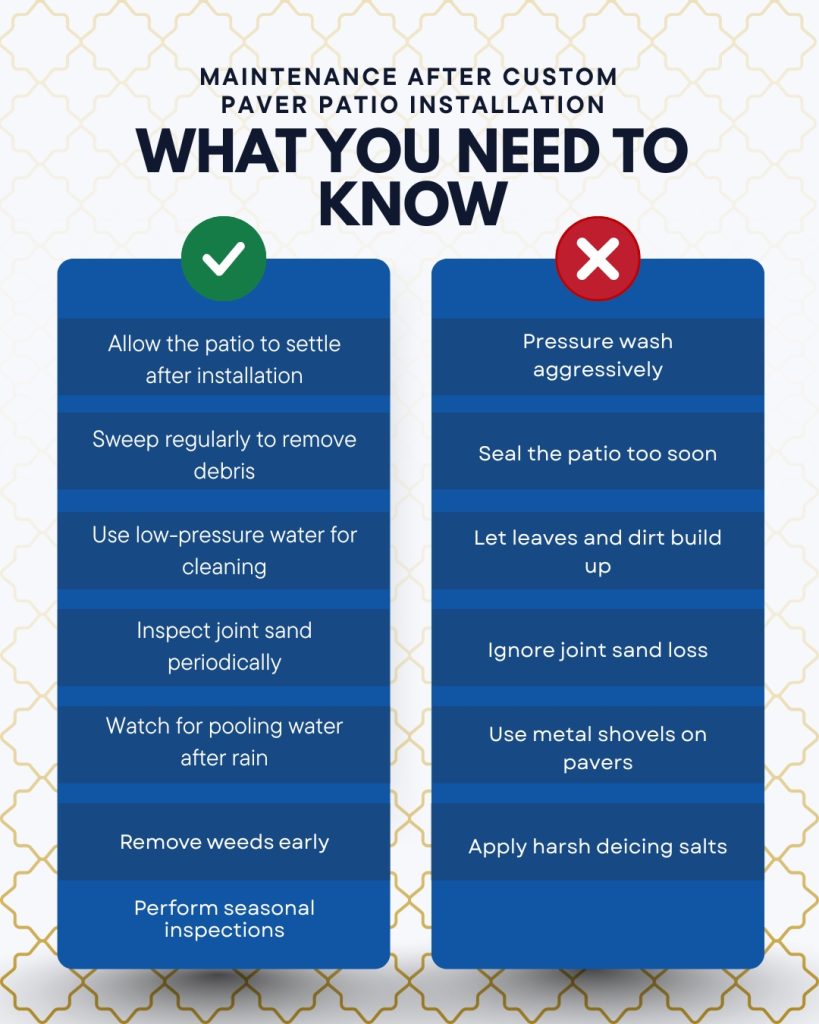
After a custom paver patio installation is complete, the patio goes through a natural settling period. The base materials compress slightly, and joint sand settles into place. This process is expected and plays an important role in long-term stability.
During the first few weeks, homeowners should avoid pressure washing or applying sealant. Light sweeping is recommended to remove dust and debris without disturbing the joints. Paying attention during this phase helps prevent unnecessary movement and keeps the patio properly balanced.
☐ Keep the Surface Clear of Organic Debris
Organic debris such as leaves, dirt, and pollen may seem harmless, but it has a significant impact on paver performance. When debris sits on the surface, it traps moisture against the pavers and joint sand. Over time, this leads to staining, joint deterioration, and increased weed growth.
Regular sweeping keeps the surface dry and clean. This simple habit protects the patio’s appearance while reducing long-term maintenance needs.
☐ Use Gentle Cleaning Methods Only
Paver patios do not require aggressive cleaning to stay in good condition. In fact, excessive force can do more harm than good. High-pressure washing removes joint sand, weakens the interlocking system, and increases the risk of shifting.
Occasional rinsing with a garden hose is usually enough to remove surface residue. If deeper cleaning is needed, low-pressure methods should be used carefully. Preserving joint integrity is more important than achieving a perfectly clean surface.
☐ Inspect Joint Sand on a Regular Basis
Joint sand is a key structural component of a custom paver patio installation. It locks pavers together while allowing controlled movement under load. When joint sand erodes or washes away, pavers lose support and begin to shift.
Homeowners should periodically inspect joints for gaps, uneven areas, or loose pavers. Addressing joint sand loss early helps maintain stability and prevents more extensive repairs.
☐ Address Weed Growth Early
Weeds on paver patios are commonly misunderstood. In most cases, weeds originate from airborne seeds that settle in organic debris, not from beneath the patio. Allowing debris to accumulate creates an environment where weeds can take root.
Removing weeds early, before root systems establish, is far more effective than chemical treatments. Maintaining clean surfaces and healthy joint sand significantly reduces recurring weed issues.
☐ Monitor Drainage After Rainfall
Water management plays a critical role in patio longevity. After heavy rain, homeowners should observe how water moves across and away from the patio surface. Pooling water or soft areas can indicate drainage issues.
If water consistently collects in certain areas, it can erode the base material and lead to paver movement. Identifying drainage problems early allows for corrective action before structural damage occurs.
☐ Perform Seasonal Inspections
Seasonal changes place different stresses on a paver patio. Freeze-thaw cycles, heat expansion, and falling debris all affect the system over time. A brief inspection at the start of each season helps identify early warning signs.
Checking joints, clearing debris, and monitoring drainage are simple steps that prevent small issues from becoming major repairs.
☐ Use Proper Winter Care Techniques When Applicable
In colder climates, winter maintenance requires extra care. Metal shovels can chip or scratch pavers, while harsh deicing salts can degrade joint sand and surface materials.
Using plastic shovels and paver-safe deicing products helps protect the patio during winter months. Gentle snow removal methods preserve both appearance and structure.
☐ Evaluate the Need for Sealing
Sealing a paver patio is optional and depends on several factors, including paver type, exposure, and usage. When done correctly, sealing can enhance color and reduce staining, but it should never be rushed.
Most patios should remain unsealed for at least 60 to 90 days after installation. This allows the patio to fully settle and dry. Sealing decisions should be based on function and long-term goals rather than appearance alone.
☐ Schedule Professional Evaluation When Needed
Some maintenance concerns require professional attention. Persistent paver movement, recurring joint sand loss, or ongoing drainage problems should not be ignored. These issues rarely resolve on their own and often worsen over time.
Scheduling a professional evaluation with Eli’s Paver Patios allows potential problems to be identified early, when repairs are simpler and less disruptive. A timely inspection can help protect the base of your patio, extend its lifespan, and prevent unnecessary repair costs.
If something feels off, it is worth having an experienced installer take a closer look before small issues become major ones.
☐ Avoid Common Maintenance Mistakes
Preventing damage is just as important as performing routine care. Common mistakes include pressure washing too frequently, ignoring joint sand loss, applying sealant too early, and allowing debris to accumulate for long periods.
Avoiding these errors helps preserve the integrity of the custom paver patio installation and reduces long-term maintenance needs.
Why This Checklist Works
A custom paver patio installation functions as a system. The surface, joints, base, and drainage all work together to provide durability and flexibility. This checklist focuses on protecting those components through informed, consistent care.
Following each maintenance checkpoint helps homeowners maintain a level, functional, and visually appealing patio for years to come.