Thinking about swapping your grass for artificial turf? You’re not alone. More homeowners are ditching their thirsty lawns for something greener, cleaner, and easier to manage.
Whether you’re tired of mowing every weekend or just looking to cut down on your water bill, artificial turf can be a smart upgrade.
In this guide, we’ll walk you through everything you need to know — what to expect, what you’ll need, and how to make sure your artificial turf installation goes smoothly — so you can decide if artificial turf’s right for you.
Why Homeowners Choose Artificial Turf
So, why are more homeowners making the switch to artificial turf? It comes down to saving time, money, and hassle without sacrificing curb appeal. Here are some of the biggest reasons turf is becoming a go-to option for modern yards:
- Slash your water bill. Replacing natural grass can save up to 55 gallons of water per square foot each year. That’s about 55,000 gallons for a modest 1,000 sq. ft. yard.
- Cut maintenance to minutes, not hours. Skip mowing, fertilizing, and edge-trimming. A quick rinse and brush-up handles most upkeep.
- Stay green through droughts. Synthetic blades and UV-resistant backing keep their color even in harsh sun.
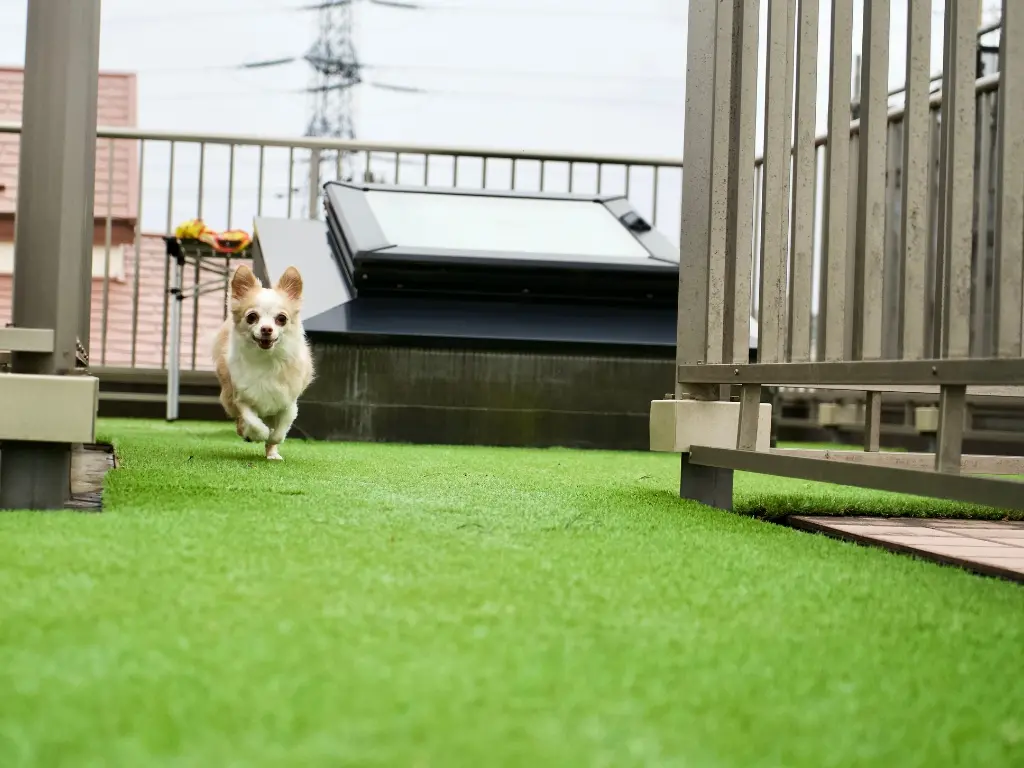
- Enjoy pet-friendly durability. Modern polyethylene turf resists digging, staining, and odors when paired with an antimicrobial infill.
- Boost curb appeal fast. Freshly laid turf offers instant color and texture—no waiting for seed to sprout or sod to root.
Is Artificial Turf Right for Your Yard?
Artificial turf can be a great option but it’s not always a one-size-fits-all solution. Before you commit, take a moment to think about how your yard is used and what conditions you’re working with.
Here are some important questions to help you figure out if artificial turf is the right choice for your space:
- How much foot traffic do you expect? Heavy play areas call for a denser pile and tougher infill.
- Do you have pets? Choose permeable backing and an odor-neutralizing infill like zeolite.
- What’s your drainage profile? Low spots or heavy clay may need extra sub-base prep to avoid pooling.
- Are local regulations in play? Some HOAs and municipalities regulate reflective heat or require permeable hardscape ratios.
- What’s your upfront budget? Expect $5–$20 per sq. ft. installed, depending on turf quality, project complexity, and excavation needs.
Planning Your Artificial Turf Installation
Before the installation begins, some upfront planning goes a long way. Taking the time to prepare your space, materials, and timeline can help you avoid mistakes and make the whole process smoother. Here’s what to focus on before the first roll of turf hits the ground.
Step 1: Measure Your Space Accurately
Start by measuring your lawn as precisely as possible, including all curves and edges. Add about 10% extra to account for cutting and fitting around borders.
Step 2: Select a Turf Style
Choose a turf type that fits how you’ll use the space. For instance, short-pile for sports, medium for everyday landscaping, or plush for a premium look. Always request samples and check them outdoors so you know exactly how they’ll look in natural light.
Step 3: Verify Drainage
Run a simple hose test and watch how quickly water drains from different areas of your yard. If you notice puddling after five minutes, you’ll likely need additional excavation or a drainage system.
Step 4: Confirm Base Material Depth
Make sure you plan for 3–4 inches of compacted crushed rock or road base under your turf. This layer is critical for preventing uneven surfaces, shifting, and poor drainage.
Step 5: Schedule Turf Deliveries
Try to have your turf delivered the same day you finish preparing the base layer. Rolls are bulky and heavy, and leaving them outside for too long can lead to damage or creasing.
Tools and Materials Checklist
- Turf rolls (make sure dye lots match)
- Class II road base or decomposed granite
- Plate compactor (rent)
- Turf cutter or shovel for old sod
- Landscape rake and hand tamper
- Weed-suppressing fabric
- Seam tape and turf adhesive
- Utility knife with extra blades
- Infill (silica sand, acrylic-coated sand, or zeolite)
- Power broom or stiff push broom
Step-by-Step Installation
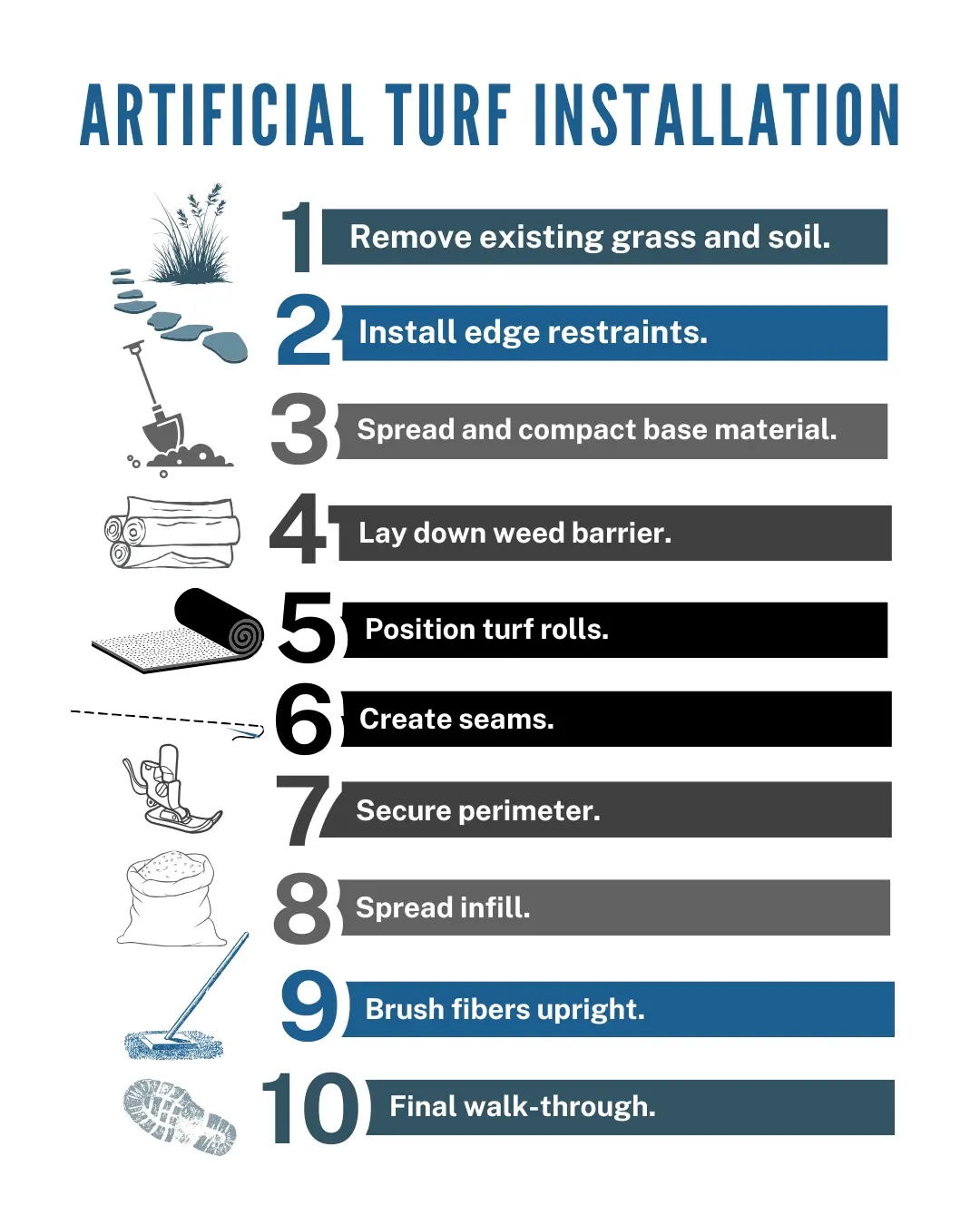
Once your yard is prepped, it’s time to lay the turf. Each step below plays a key role in making sure your installation looks good, drains properly, and holds up over time.
Step 1: Remove Existing Grass and Soil
Dig out the existing grass and topsoil to a depth of 3–4 inches across the entire area. You can haul the debris away or reuse it in garden beds or planters.
Step 2: Install Edge Restraints
Add bender board, paver edging, or concrete curbing around the perimeter. This keeps your base layer and turf from shifting outward over time.
Step 3: Spread and Compact Base Material
Lay your crushed rock or decomposed granite in 2-inch layers for best compaction. Use a plate compactor and work in overlapping rows to create a solid, even base.
Step 4: Lay Down Weed Barrier
Roll out landscape fabric over the compacted base with about 6 inches of overlap between sheets. Staple it down every 12 inches to keep it secure and minimize weed growth.
Step 5: Position Turf Rolls
Unroll turf so the blade direction—or “grain”—faces the same way across the whole lawn. Leave about a half-inch of extra turf around the edges for final trimming.
Step 6: Create Seams
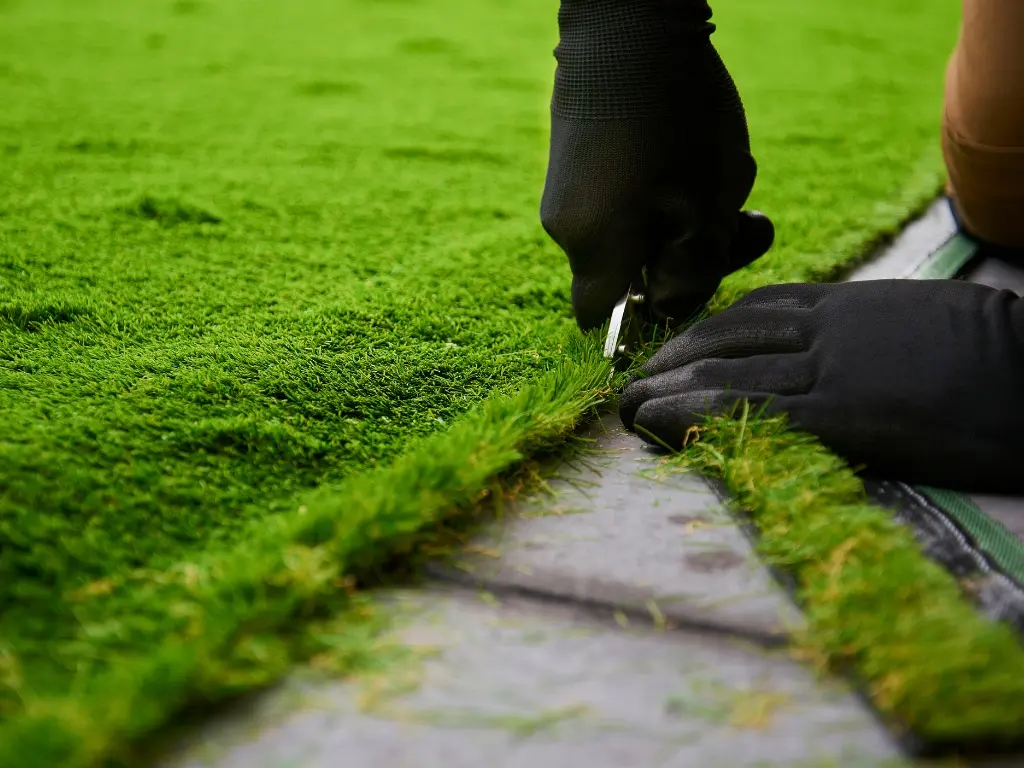
Trim off factory edges, then line up the blades tightly where two pieces meet. Apply seam tape underneath and secure it with strong outdoor adhesive.
Step 7: Secure Perimeter
Use 6-inch non-galvanized turf nails spaced every 6–8 inches along the edges. This helps lock down the turf and prevents lifting from foot traffic or weather.
Step 8: Spread Infill
Use a drop spreader to apply 1–2 pounds of infill per square foot, depending on your turf’s blade height. The infill helps the blades stand up and adds weight for stability.
Step 9: Brush Fibers Upright
Run a power broom over the turf to lift the blades and evenly distribute the infill. Repeat as needed until the surface looks even and natural.
Step 10: Final Walk-Through
Check all seams, edges, and the overall layout for anything that looks off. Rinse the turf with water to remove installation dust and help the infill settle.
Maintenance After Installation
Artificial turf is low-maintenance, but not zero-maintenance. These simple tasks will help your lawn look great and last for years.
Monthly Brushing
Use a stiff broom or power brush to lift the blades and keep them from matting down. It also helps redistribute infill that may have shifted.
Rinse Off Spills and Pet Waste
Clean up messes right away with a hose to prevent staining. For tougher spots, a 50/50 mix of vinegar and water works well for neutralizing odors.
Use a Leaf Blower in Fall
Blow off leaves, twigs, or other organic debris before they start to break down. Letting that material sit can create mold or moss issues over time.
Inspect Seams and Edges Twice a Year
Take a close look at seam lines and borders in spring and fall. If anything starts to lift, re-nail or re-glue as needed to keep it secure.
Cool Turf on Hot Days
On extremely hot days, give the turf a quick spray with water to bring the surface temperature down. It cools within minutes and makes the area more comfortable.
Frequently Asked Questions
Got questions about artificial turf? You’re not the only one. Here are some of the most common things homeowners want to know before making the switch.
-
How long does artificial turf last?
High-quality artificial turf typically lasts 15 to 25 years, depending on the level of foot traffic, exposure to sun, and how well it’s maintained.
-
Does artificial turf get hot in the summer?
Yes, turf can get 20–30°F hotter than the surrounding air. Spraying it with water helps cool it down quickly, especially on extra hot days.
-
Is artificial turf safe for kids and pets?
Yes. Most turf products are non-toxic, lead-free, and safe for children and pets. For added protection, use pet-friendly infill with antimicrobial properties.
-
Can I install turf over concrete or pavers?
You can install turf over hard surfaces, but you’ll need proper drainage and cushioning layers. This helps prevent water buildup and makes the surface more comfortable.
-
Will installing artificial turf increase my home’s value?
In many cases, yes. A low-maintenance, year-round green lawn can improve curb appeal and attract buyers looking for water-efficient landscaping.
Ready to Transform Your Yard?
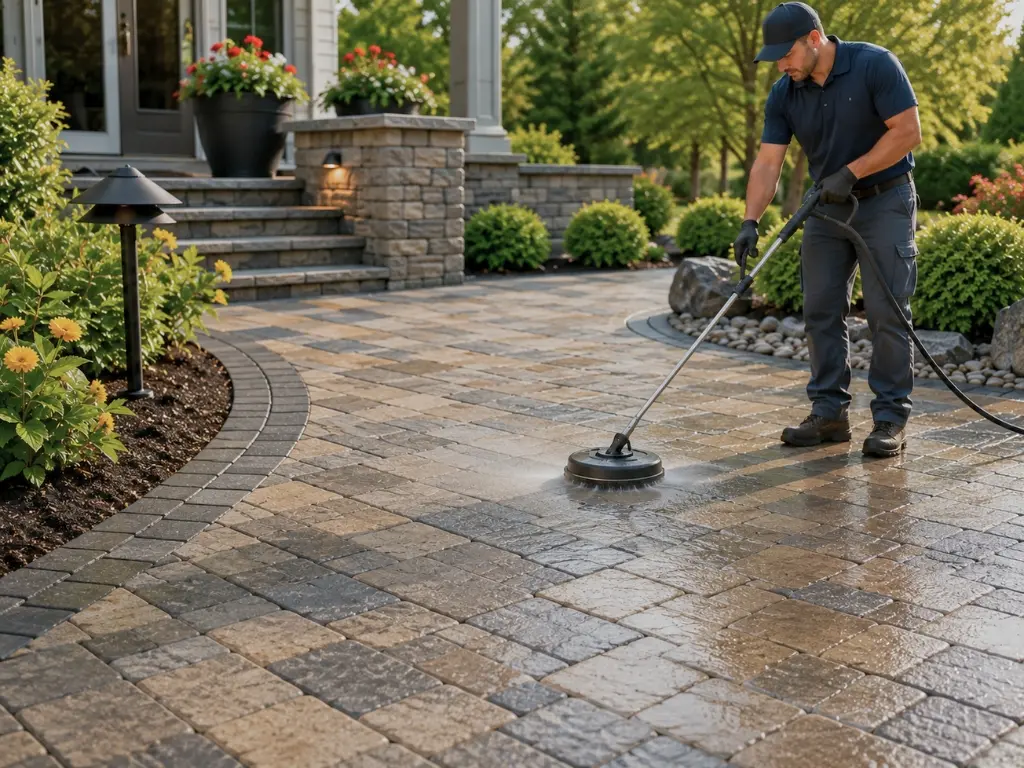
Eli’s Paver Patios installs premium artificial turf that blends seamlessly with your hardscape and paver designs. Request a free site assessment today, compare turf samples on the spot, and see how quickly your outdoor space can turn maintenance headaches into weekend relaxation.