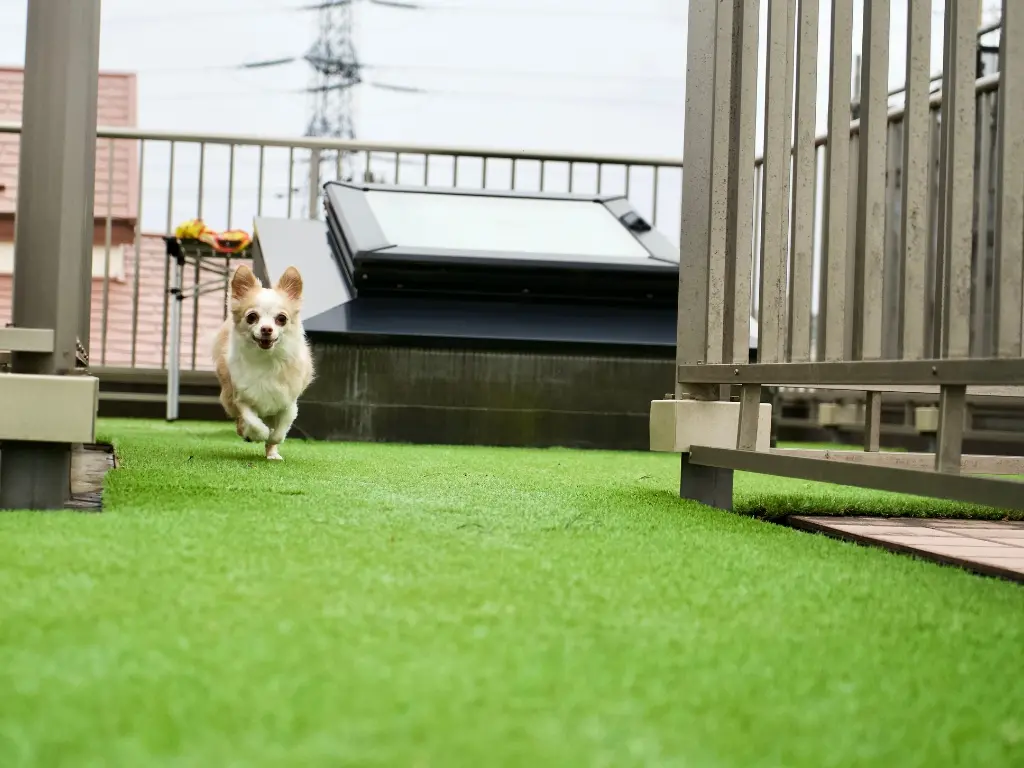
Pets bring endless joy to a home, but they can also take a toll on your lawn. From muddy paw prints and worn patches to brown spots caused by pet urine, maintaining a healthy natural lawn can quickly become a frustrating and expensive task.
If you’re looking for a cleaner, lower-maintenance alternative, artificial grass may be the solution. Before making the investment, however, it’s important to understand what makes some artificial turf better suited for pets than others.
Why More Pet Owners Are Choosing Artificial Grass
With pet ownership continuing to rise, more homeowners are looking for outdoor solutions that can keep up with active animals. According to the American Veterinary Medical Association, 77.5 million U.S. households owned at least one pet in 2025, making durable, pet-friendly landscaping a growing priority.
Natural grass often struggles to withstand daily digging, running, and repeated bathroom use, leaving lawns patchy, muddy, and difficult to maintain.
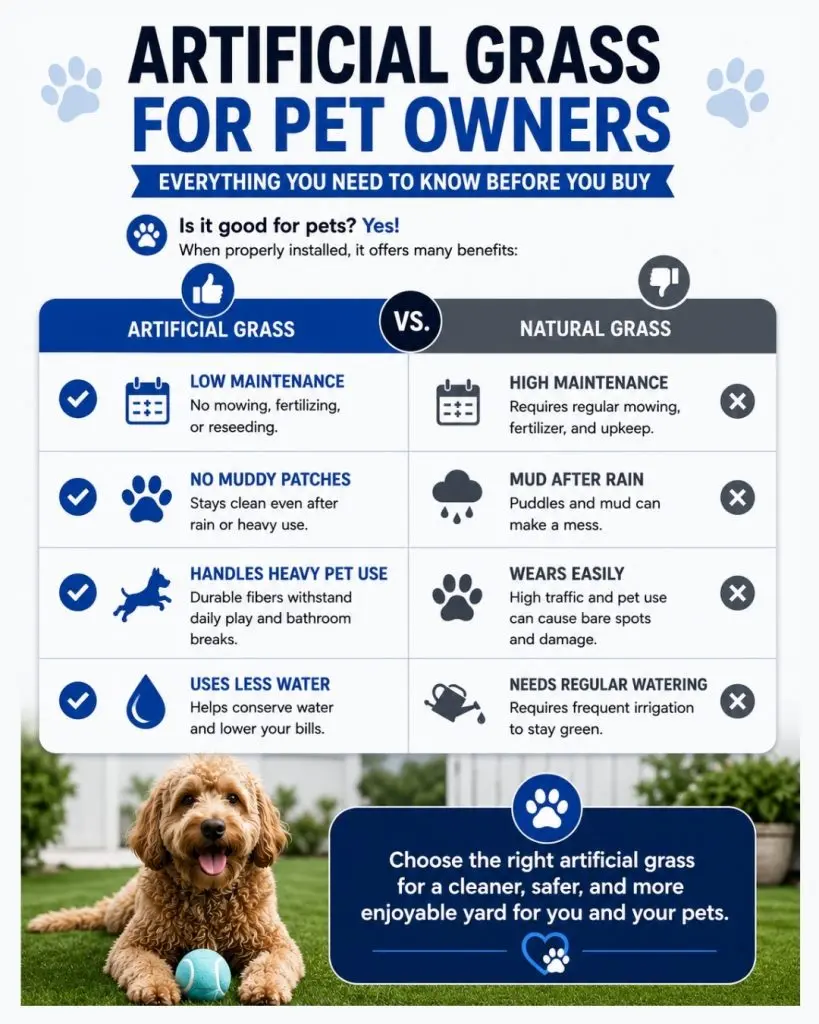
Artificial grass offers a consistently green surface that doesn’t require mowing, fertilizing, or frequent watering. It also helps eliminate muddy areas after rain, keeping both pets and floors cleaner while providing a low-maintenance lawn that looks great year-round.
Is Artificial Grass Good for Pets?
Yes, artificial grass can be an excellent choice for pets when you select a high-quality product designed for residential and pet use.
The best pet-friendly artificial grass features non-toxic materials, soft yet durable fibers, efficient drainage, and odor-resistant infill to keep the surface safe, comfortable, and hygienic for both pets and their owners.
Features to Look for When Buying Artificial Grass for Pets
Choosing the right artificial grass is just as important as deciding to install it. Since products vary in quality and performance, it’s worth taking the time to compare your options before making a purchase.
Non-Toxic, Pet-Safe Materials
Choose artificial grass made from non-toxic, lead-free materials that are safe for dogs and cats. Reputable manufacturers often provide product certifications and use durable fibers that resist wear without shedding or breaking down over time.
Soft Yet Durable Fibers
Pet-friendly turf should feel comfortable under your pet’s paws while standing up to daily running, playing, and digging. Medium-density, resilient fibers provide a natural feel without flattening quickly under heavy use.
Fast-Draining Backing
An efficient drainage system is one of the most important features for pet owners. High-quality artificial grass allows urine to drain through the backing quickly, reducing puddles, minimizing odors, and making routine rinsing much easier.
Odor-Resistant Infill
The right infill can improve both performance and cleanliness. Pet-friendly infill options help neutralize odors, support drainage, and keep the turf stable, creating a fresher outdoor environment between cleanings.
UV-Resistant Construction
Quality artificial grass should include UV protection to prevent fading and material deterioration from prolonged sun exposure. This helps maintain both the appearance and performance of the lawn for years.
While artificial grass significantly reduces lawn maintenance, it still benefits from regular rinsing, prompt waste removal, and occasional brushing to keep it clean, odor-free, and enjoyable for both pets and their owners.
Artificial Grass vs. Natural Grass
When comparing artificial grass and natural grass, the best choice depends on your priorities as a pet owner.
Natural grass offers a cooler surface and supports local ecosystems, but it often requires ongoing watering, mowing, fertilizing, and repairs to recover from heavy pet use.
Artificial grass, on the other hand, delivers a consistently clean and durable lawn that can withstand daily activity with significantly less maintenance. Here’s a quick comparison of how artificial grass and natural grass perform for households with pets.
| Artificial Grass | Natural Grass |
| Low maintenance | Requires mowing, watering, and fertilizing |
| Resists heavy pet traffic | Can develop bare or muddy patches |
| Excellent mud control | Mud forms after rain |
| Minimal water use | Requires regular irrigation |
| Predictable long-term maintenance costs | Ongoing lawn care expenses |
| Green year-round | Changes with weather and seasons |
While the upfront installation cost is typically higher, many homeowners find that the reduced upkeep, lower water consumption, and year-round usability make it a worthwhile long-term investment.
How to Keep Artificial Grass Clean With Pets
One of the biggest advantages of artificial grass is that it requires very little routine maintenance. However, when pets use the lawn daily, a few simple cleaning practices become important to keep the surface sanitary, control odors, and ensure it remains a comfortable place for both pets and people.
- Remove Waste Promptly: Pick up solid waste as soon as possible to keep the surface clean and minimize odor buildup.
- Rinse High-Use Areas: Spray areas your pets frequently use with water to flush away urine and other residue.
- Use Enzyme-Based Cleaners: Apply pet-safe enzyme cleaners when needed to break down odor-causing bacteria without harming the turf.
- Brush the Grass Occasionally: Brush the fibers periodically to keep them upright and remove leaves, dirt, and other debris.
- Schedule Professional Maintenance: Consider occasional professional cleaning for larger yards or homes with multiple pets to maintain optimal performance and appearance.
- Practice Good Hygiene: Wash your hands after handling pet waste, as healthy animals can still carry germs that may spread to people.
The Centers for Disease Control and Prevention also recommends washing hands after handling pet waste or cleaning areas used by animals, as healthy pets can still carry germs that may spread to people.
When Artificial Grass Is the Right Choice and When It Isn’t
Artificial grass is an excellent choice for households with one or more pets, especially dogs that spend a lot of time running, playing, or using the yard as their designated bathroom area.
It provides a durable surface that won’t develop muddy patches, bare spots, or urine-related discoloration as easily as natural grass, making it easier to keep both your yard and your home cleaner. It’s also a practical solution for senior dogs or pets with mobility issues, as a level, well-installed surface can offer more consistent footing throughout the year.
However, artificial grass may not be the best fit for every pet owner. If your pets enjoy digging, chewing grass, or spending long periods outdoors during hot weather, you’ll need to consider factors such as heat management, shade, and routine cleaning.
By evaluating your pets’ habits, activity level, and daily needs, you can determine whether artificial grass is the right long-term solution for creating a safe and comfortable outdoor space.
Make the Best Choice for Your Pets and Your Lawn
Choosing artificial grass is about more than improving your yard’s appearance; it’s about creating a cleaner, more durable outdoor space that both you and your pets can enjoy. By focusing on quality materials, proper drainage, pet-safe components, and professional installation, you’ll enjoy a lawn that stays beautiful with far less upkeep.
Ready to create a cleaner, pet-friendly yard? Contact Eli’s Paver Patios today to explore artificial grass options designed for pets, your lifestyle, and your outdoor space.