Building an outdoor kitchen goes beyond choosing grills, cabinets, and countertops. Your flooring must withstand heavy foot traffic, spills, grease, weather, and changing temperatures while remaining safe and easy to maintain.
Outdoor kitchen pavers, tile, and natural stone each offer distinct advantages. Comparing their durability, maintenance, safety, appearance, and repairability can help you choose the right surface for your space.
What Should You Look for in an Outdoor Kitchen Surface?
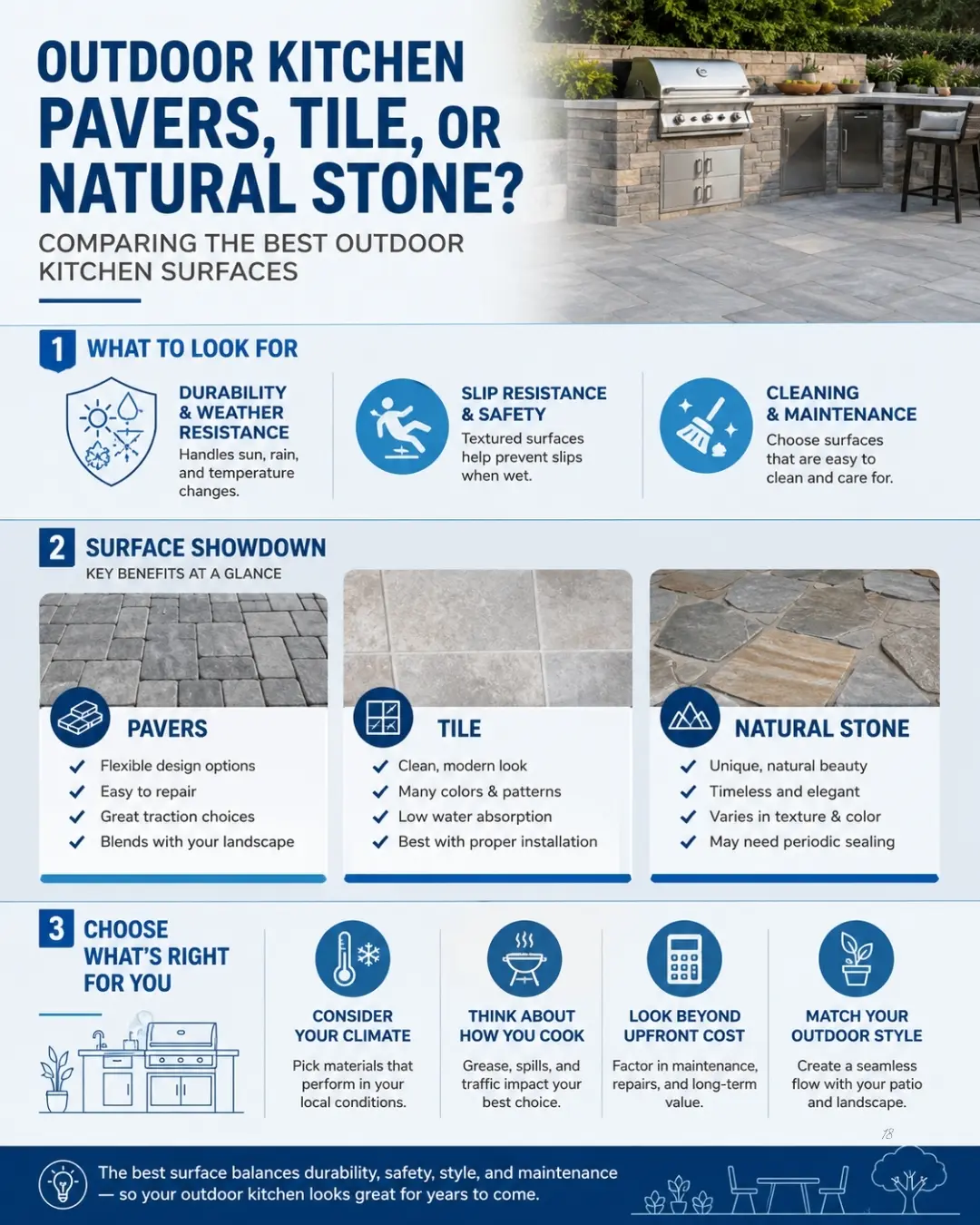
Outdoor kitchens experience conditions that indoor flooring rarely faces. Before comparing specific materials, consider how your surface will respond to your climate and everyday activities.
Durability and Weather Resistance
Your outdoor kitchen surface may spend years exposed to direct sunlight, rain, temperature fluctuations, and heavy furniture. Depending on your location, it may also need to withstand freezing temperatures.
The material itself is only part of the equation. Proper drainage, base preparation, and installation can have a major impact on long-term performance.
Consider your local climate before choosing a surface. A product that performs well in a dry environment may have different maintenance requirements in an area that receives frequent rain or freeze-thaw cycles.
The Tile Council of North America (TCNA) notes that freeze-thaw conditions can damage exterior tile installations when moisture enters materials and freezes, making proper material selection and installation especially important in colder climates.
Slip Resistance and Safety
Outdoor kitchens often have sinks, refrigerators, beverage stations, and nearby pools. Water can easily reach the flooring.
Surface texture matters as a result. Smooth materials may look appealing but can become slippery when wet. When comparing pavers, tile, or stone, look beyond appearance and consider the finish and traction each option provides.
Cleaning and Maintenance
Cooking outdoors means dealing with grease, sauces, drinks, dropped food, leaves, dirt, and other debris.
Some surfaces are easier to clean than others. Porous materials may absorb spills if they are not properly protected, while grout or paver joints can require periodic attention.
Understanding these maintenance requirements before installation can prevent unwanted surprises later.
Outdoor Kitchen Pavers
Outdoor kitchen pavers are available in different sizes, shapes, textures, colors, and patterns. This flexibility makes them suitable for everything from traditional patios to modern outdoor entertainment areas.
Benefits of Outdoor Kitchen Pavers
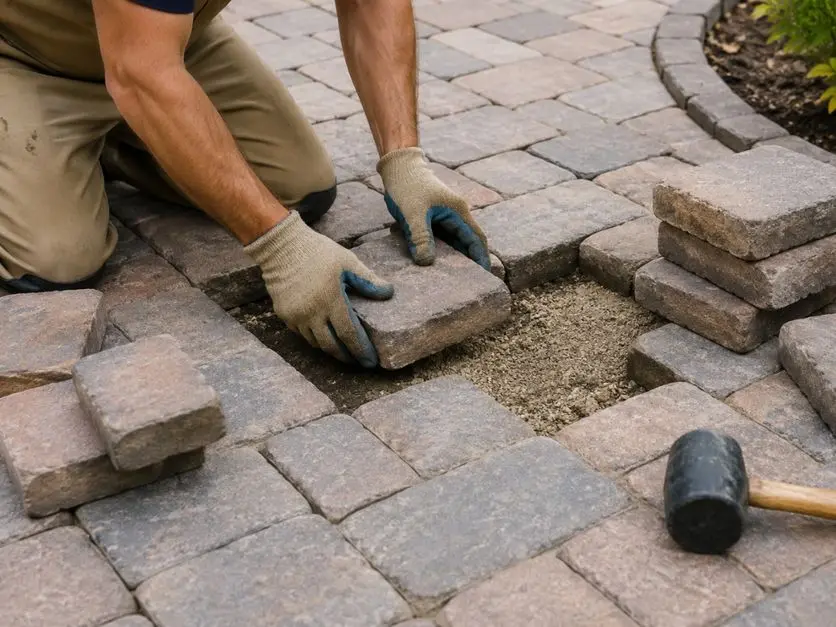
One major advantage is repairability. Because a paver surface consists of individual units, a damaged or heavily stained section can often be addressed without removing the entire patio.
Pavers also provide considerable design flexibility. You can use borders, contrasting colors, different laying patterns, or separate designs to distinguish cooking and dining zones.
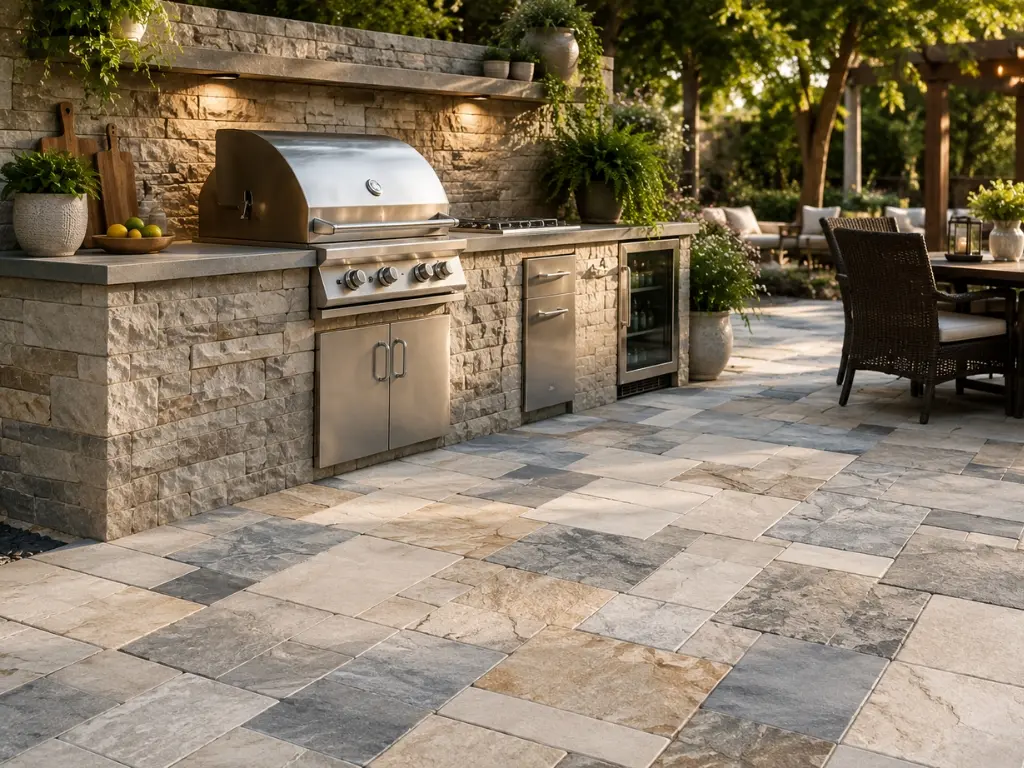
They can also help create visual continuity throughout your backyard. For example, the same or complementary pavers can connect your outdoor kitchen with a patio, walkway, pool deck, or fire pit.
Potential Drawbacks of Pavers
Outdoor kitchen pavers still require proper installation and maintenance.
Poor base preparation may eventually contribute to shifting or uneven areas. Joints also require attention, and some paver materials may benefit from sealing to reduce staining.
For an outdoor kitchen, consider how a specific paver handles grease and food spills rather than choosing solely based on color or pattern.
Outdoor Kitchen Tile
Tile can create a clean, consistent appearance that works particularly well with contemporary outdoor kitchens.
Porcelain is one option commonly considered for exterior applications. Outdoor-rated products are available in numerous colors, patterns, and finishes, including designs that reproduce the appearance of stone or wood.
Benefits of Outdoor Tile
Tile gives homeowners considerable control over the finished appearance. Large-format products can create a streamlined look, while patterned tiles can add visual interest.
Suitable porcelain products can also have low water absorption, which is valuable when choosing materials for exposed areas.
Cleaning the tile surface itself can be relatively straightforward, depending on the product and finish.
Potential Drawbacks of Outdoor Tile
Not every tile belongs outside. Products need to be selected specifically for the environment and intended application.
Traction is another important consideration. A smooth tile can become slippery after rain or when water splashes from a sink or pool.
Grout lines also require maintenance, and installation needs to account for environmental conditions. These considerations make professional product selection and installation particularly important.
Natural Stone
Natural stone gives an outdoor kitchen an appearance manufactured materials cannot reproduce exactly. Granite, slate, limestone, travertine, and flagstone are among the options homeowners may encounter.
Each piece can have variations in color, pattern, and texture, making the finished area unique.
Benefits of Natural Stone
Stone works particularly well when you want the kitchen to blend with landscaping, masonry, garden features, or a more traditional home.
Appropriate natural stone can also provide a durable outdoor surface when installed correctly.
Its variation is often part of the appeal. Rather than having a perfectly uniform floor, you get natural differences between individual pieces.
Potential Drawbacks of Natural Stone
“Natural stone” is a broad category, so maintenance and performance vary considerably.
Some stones are more porous than others and may require sealing to help manage stains. This becomes especially relevant around grills and food preparation areas where grease can reach the floor.
Stone can also involve higher material or installation costs depending on the product, availability, and complexity of the project.
Outdoor Kitchen Pavers vs. Tile vs. Natural Stone
Outdoor kitchen pavers, tile, and natural stone can all create a durable, attractive foundation for your cooking space, but they perform differently. Comparing their maintenance needs, durability, design options, and repairability can help you find the surface that best fits your backyard and lifestyle.
| Factor | Pavers | Tile | Natural Stone |
| Design Flexibility | High | High | High |
| Individual Repairs | Relatively easy | Varies | Moderate |
| Maintenance | Moderate | Moderate | Varies |
| Slip Resistance | Depends on texture | Depends on finish | Depends on stone and finish |
| Stain Resistance | Varies | Often high with suitable porcelain | Varies |
| Natural Appearance | Moderate | Varies | High |
| Installation Complexity | Moderate | High | High |
| Cost | Varies | Varies | Often higher |
These comparisons are general. Specific products, installation methods, climate, finishes, and maintenance practices can significantly change how a surface performs.
What Is the Best Surface for an Outdoor Kitchen?
The best surface for an outdoor kitchen depends on your climate, cooking habits, maintenance preferences, and overall backyard design. A good surface should withstand weather exposure, spills, grease, and regular foot traffic while providing enough traction for safe movement around cooking and dining areas.
Outdoor kitchen pavers are a strong choice for homeowners who value design flexibility, durability, and easier repairs. Tile can provide a clean, modern finish, while natural stone offers unique texture and character. Compare each material based on long-term maintenance, safety, cost, and performance to find the right fit for your outdoor kitchen.
How to Choose the Right Surface for Your Outdoor Kitchen
Start with your local environment. Consider rainfall, intense sunlight, temperature changes, and freeze-thaw conditions where applicable.
Next, think about how you cook. Someone who grills several times each week may prioritize stain management and easy cleaning. An outdoor kitchen used mainly for occasional entertaining may place greater emphasis on appearance.
Don’t compare installation prices alone. Consider potential sealing, cleaning, joint or grout maintenance, repairs, and replacement costs.
Finally, look at your entire backyard. Your outdoor kitchen flooring should complement nearby patios, pools, walkways, landscaping, retaining walls, and your home’s exterior.
Build Your Outdoor Kitchen on the Right Surface
The right surface can make your outdoor kitchen more functional, attractive, and easier to maintain. Whether you prefer outdoor kitchen pavers, tile, or natural stone, your choice should complement your space while meeting the demands of outdoor cooking and entertaining.
Planning an outdoor kitchen? Eli’s Paver Patios can help you choose and install pavers that complement your cooking area, patio, and surrounding landscape. Contact our team to discuss your outdoor kitchen project and explore options for your space.