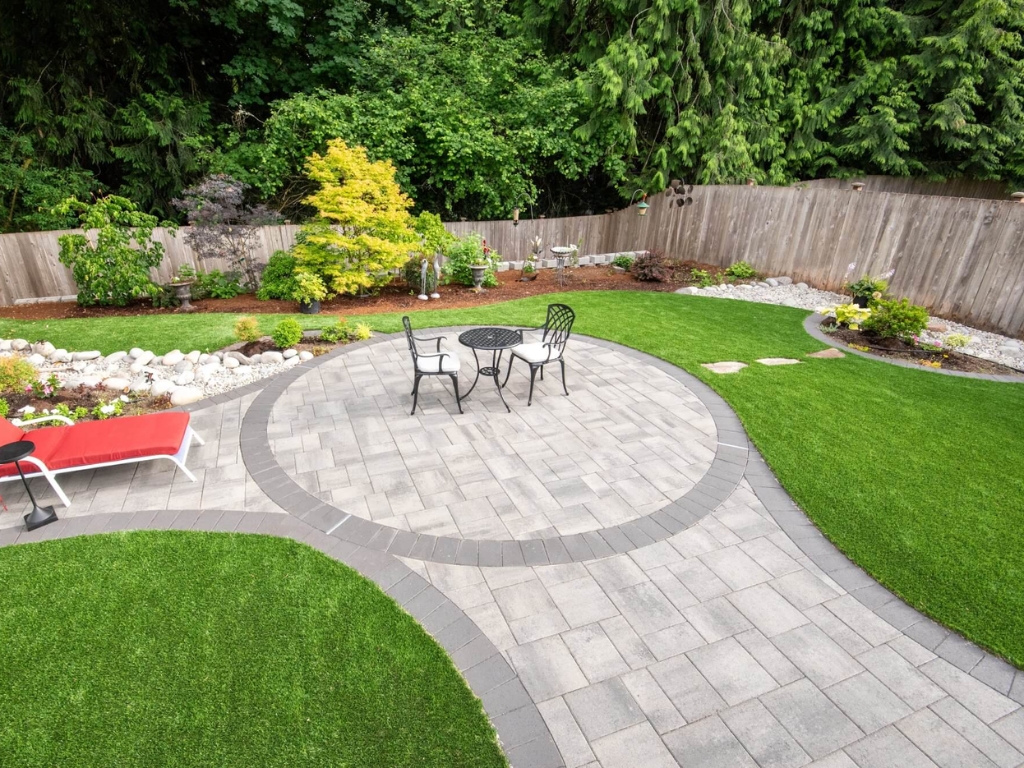
If you want to learn how to install artificial turf in a clear, no-nonsense way, this guide shows you exactly what to do. The steps below reflect what actually works in Kirkland’s wet climate, where drainage, soil type, and weather patterns affect turf performance long-term.
These are the same methods professional installers use, broken down so homeowners can understand and apply them.
1. Plan the Layout Before You Buy Turf
Start by measuring your backyard accurately. Measure the full length and width of the installation area, then add about 10% extra turf to account for trimming and fitting.
Take note of obstacles like curves, trees, planter beds, and paver borders. This is important because turf comes in 15-foot-wide rolls, and poor planning leads to seams placed in visible, high-traffic areas where they’re hardest to hide.
Also consider how water moves naturally across the space so you can anticipate how the base and turf should be oriented.
A few minutes of thoughtful planning prevents unnecessary seams, wasted material, and drainage issues later. If you want design inspiration while planning your turf layout, check out this guide: How to Design a Beautiful Front Yard With Artificial Grass.
2. Remove Grass and Soil Down to 2–3 Inches
Next, remove the existing grass and the top 2–3 inches of soil. This step is non-negotiable. You need this depth to prevent future sinking and to create room for a proper base layer.
Remove all roots, rocks, and debris as you go, and lightly level and compact the soil once everything is cleared.
In Kirkland, where soil is often clay-heavy, removing enough material is essential. Clay holds water and leads to soft spots under the turf unless you create space for a proper drainage base.
3. Correct Drainage Before Building Your Base
Before you start adding base rock, pay close attention to how water behaves in your yard. If water pools anywhere after rain, or if you notice soil staying wet for more than 24 hours, you need to correct this now.
Fill low points with additional crushed rock until they’re level, maintain a slope of about 1–2% away from your house, and consider installing a French drain if water consistently gathers in one area.
Poor drainage is the number one cause of turf failures in the Pacific Northwest, and these corrections ensure your turf doesn’t wrinkle, smell, or shift over time.
4. Build a Strong 3–4 Inch Crushed Rock Base

The base is the foundation of your turf. Spread 3–4 inches of ⅝” minus crushed rock (or ¾” minus if you need more robust drainage). Rake it until the surface is smooth and level, then lightly mist it with water.
Use a plate compactor to compact the base thoroughly, and then compact it again. Two passes significantly reduce the chance of future settling.
Once compacted, walk across the base. If you feel any soft or unstable areas, add more rock and re-compact. This layer supports the turf, improves drainage, and gives the finished lawn a firm, natural feel underfoot.
5. Install Commercial-Grade Weed Barrier Fabric
Although optional, installing weed barrier fabric is a smart choice in Kirkland. Moisture and shade encourage weed growth, and a barrier gives you an extra layer of protection.
Lay the fabric directly over the compacted base and secure it with landscape staples spaced about 12 inches apart. This helps prevent future weed penetration without interfering with drainage.
6. Roll Out the Turf and Let It Relax
Unroll your turf and give it time to relax on top of the base, which usually takes 30 to 60 minutes. This allows the turf backing to soften and flatten naturally, reducing the chance of wrinkles.
It’s also important to check blade direction. Every piece of turf must face the same direction or the lawn will look mismatched in color. Blade orientation matters more than most homeowners realize, especially in shaded yards where lighting makes directional inconsistencies more obvious.
7. Trim the Turf Slowly and Precisely
When trimming the turf, flip it over and cut from the backside for accuracy. Use a sharp utility knife and change blades frequently to avoid frayed cuts. Trim small sections at a time so you stay in control of the shape.
Leave a small ¼-inch expansion gap along pavers, concrete, or edging. This gap prevents buckling when temperatures change.
Clean, precise trimming is one of the few installation steps that can’t be rushed—your edges determine how “professional” the final result looks.
8. Make Seams Disappear With Proper Technique
If your project requires multiple pieces of turf, the seam work must be as tight as possible. Align the edges so they meet cleanly with no overlapping, then fold them back and position seam tape directly underneath.
Apply turf adhesive evenly, press the edges into the tape, and ensure both sides sit flush against each other. Finally, brush the blades upward to conceal the seam.
Avoid placing seams where people walk often, as the pressure makes seams more visible over time. Good seams should disappear from a standing view.
9. Anchor the Turf to Keep It Stable
Turf needs to be anchored so it stays put through foot traffic and rainfall. Use 6-inch galvanized nails or turf staples and secure the perimeter every 6–8 inches.
For the interior, place fasteners every 12–18 inches. Add extra nails in corners, curves, and high-traffic areas. The nails should sit flush with the turf backing without pinching the fibers. Proper anchoring prevents ripples, shifting, and loose edges.
10. Add Infill at 1–2 Pounds Per Square Foot
Infill adds weight, supports the blades, and protects the turf backing. Without it, turf mats down quickly and deteriorates faster.
Silica sand works for most Kirkland backyards, while pet owners often prefer zeolite for odor control. Coated sand is a good choice for high-traffic areas because it stays in place better.
Apply 1–2 pounds of infill per square foot using a drop spreader for even coverage, then work the infill deep into the fibers with a stiff broom or power broom. This step also helps the turf stand upright and look more natural.
11. Brush the Turf to Lift and Set the Blades
Once the infill is applied, brush the turf against the grain. This brings the fibers upright and ensures the infill distributes evenly throughout the lawn.
After the turf settles for 24 hours, brush it again. Brushing gives the lawn a clean, natural appearance and keeps the blades from matting prematurely.
Extra Kirkland-Specific Tips for Long-Term Performance
- Install turf only when the soil is completely dry so the base compacts evenly.
- Choose turf with strong drainage perforations, especially for shaded or low-light areas.
- Avoid rubber infill under shaded sections since it stays damp longer and can trap odors.
- Brush leaves and debris off the turf regularly to prevent moisture buildup.
- Monitor shaded corners more frequently, as moss develops faster in Pacific Northwest climates.
- Add extra base material in areas known to collect water to improve long-term drainage.
DIY vs. Hiring a Professional
You can install turf yourself if your yard is a straightforward shape, the slope is minimal, and you have access to a compactor and cutting tools. But professional installation is usually the better choice when drainage is complicated, the yard is large or sloped, or you want curved edges or a putting green.
Professionals like Eli’s Paver Patios use tools and base-building techniques designed specifically for Pacific Northwest soil conditions, producing a longer-lasting result with fewer risks.
A Turf Installation That Lasts Years
You now have a clear understanding of how to install artificial turf using the correct depth, tools, and procedures needed for Kirkland’s climate. If you follow these steps carefully, your backyard will stay clean, level, and durable for many years. And if you prefer a professional installation that handles every detail, Eli’s Paver Patios is ready to help.