A great pool area doesn’t start with water; it starts with the surface around it. The deck is where you lounge, dry off, and spend time with family, so it deserves the same attention as the pool itself. The right pool pavers add comfort, grip, and lasting strength to that space.
This guide breaks down the entire installation process, helping you plan and build a pool area that feels cohesive, durable, and designed to fit your lifestyle.
Planning Your Pool Paver Installation
Every great pool deck starts with a solid plan. Before you buy materials or rent equipment, take time to think through your layout, budget, and overall design. Proper planning prevents costly mistakes once the work begins.
Start by mapping out your pool deck layout. Include lounge areas, walkways, and transitions between wet and dry zones. A clear plan helps you order the right amount of materials and visualize how everything will fit together.
Next, set a realistic budget. Consider not just the pavers themselves but also excavation, base materials, edge restraints, and sealing costs.
Don’t skip checking your local building codes and permit requirements. Some areas have rules about drainage or surface materials around pools.
If your pool area includes slopes, curves, or complex shapes, consult a professional installer. They can guide you on grading, pattern choices, and long-term durability.
Finally, define your style. Do you want a clean, modern layout with large pavers or a more natural pattern that blends into your landscape?
Choosing the Right Pool Pavers
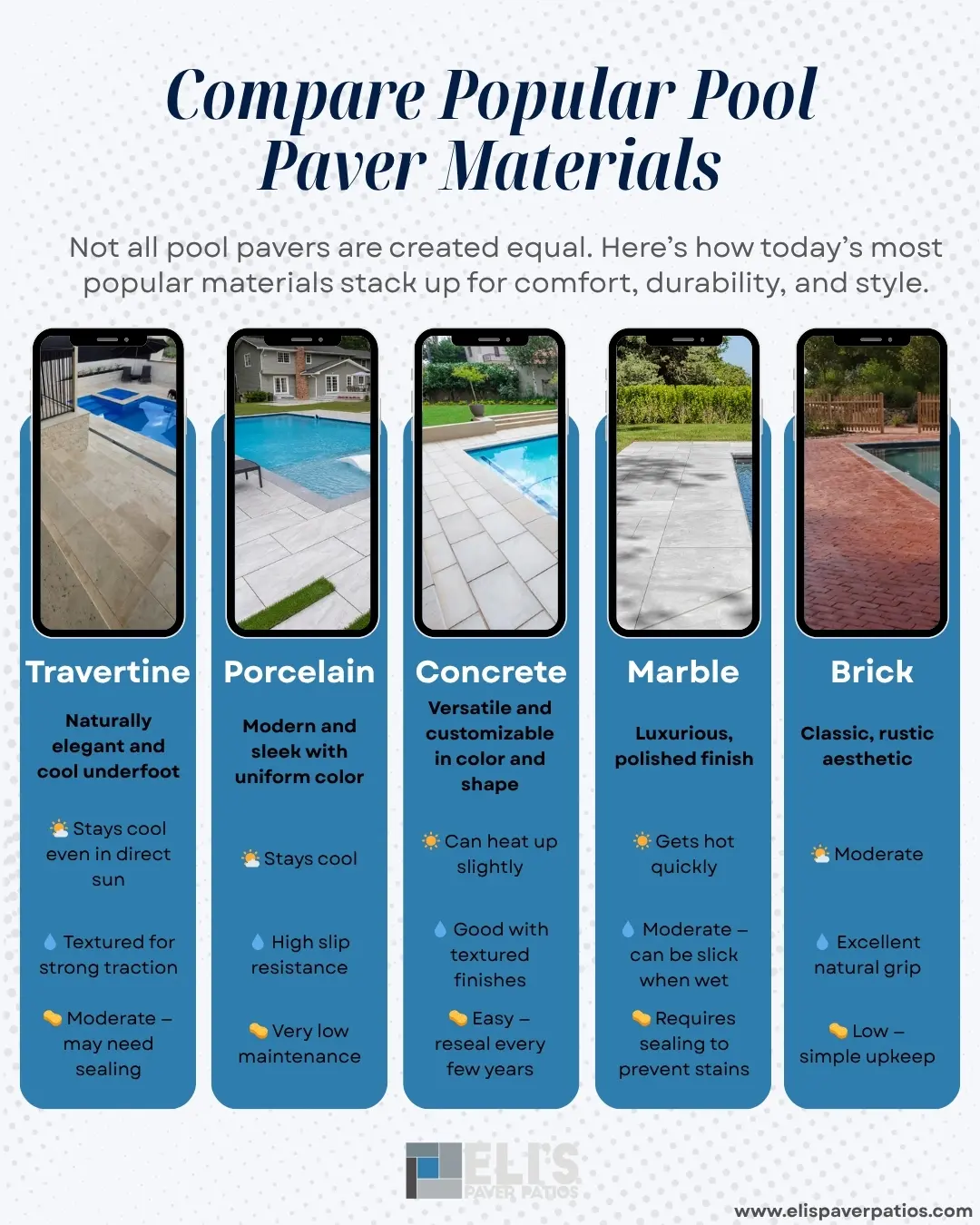
The pavers you choose will determine how your pool area looks and feels underfoot. Some stay cool and textured for safety, while others lean more decorative.
Here’s a quick guide to popular options:
- Travertine: Naturally cool and elegant with a timeless texture
- Porcelain: Modern, sleek, and low maintenance
- Concrete: Affordable, versatile, and easy to customize
- Marble: Luxurious and durable, but needs sealing
- Brick: Classic look with solid slip resistance
When comparing materials, pay attention to heat retention (lighter shades stay cooler), slip resistance (textured finishes offer better traction), and maintenance needs. Some natural stones may require periodic sealing to prevent stains.
If you’re not sure where to start, Eli’s Paver Patios confidently recommends Belgard® pavers. They’re available in a wide range of styles and textures and are built for long-term strength, reliable slip resistance, and exceptional weather performance, making them one of the best options for pool decks.
Preparing the Site
Preparation determines how long your pool pavers will last. Skipping this part often leads to uneven areas, drainage issues, and costly repairs.
Start by excavating the area to a depth of 6–8 inches. Remove soft soil, roots, and debris to prevent shifting later. Compact the ground using a plate compactor to form a firm foundation.
Next, spread a layer of crushed stone or gravel to stabilize the base. Compact again until you have an even surface.
Always ensure a 1–2% slope away from the pool to allow water to drain properly. A well-prepared base will prevent pooling and keep your pavers level for years.
Installing Edge Restraints
Edge restraints keep your pavers from shifting over time. Without them, your pool deck may start to spread or separate at the edges.
The right edging material depends on your deck’s shape, design, and long-term maintenance goals. Here are some common options.
- Concrete edging offers the strongest and most durable option. It’s poured or set along the outer border to hold the pavers tightly together, preventing movement caused by weather or heavy use. It’s ideal for larger pool decks or high-traffic areas where stability is a priority.
- Plastic edging works well for curved or irregular layouts. It’s lightweight, affordable, and flexible enough to bend around rounded pool shapes or custom patterns. Despite being less rigid than concrete, high-quality plastic edging still provides reliable support when properly installed and secured with spikes.
- Metal edging gives your pool deck a clean, streamlined appearance. Aluminum or steel versions are often used in modern designs because of their sleek profile and resistance to warping. Metal edging also sits flush with the surface, which makes it a good choice for homeowners who want a minimal, refined finish.
Install the edges before laying the pavers. Secure them with spikes or concrete to lock everything in place.
Laying the Pool Pavers
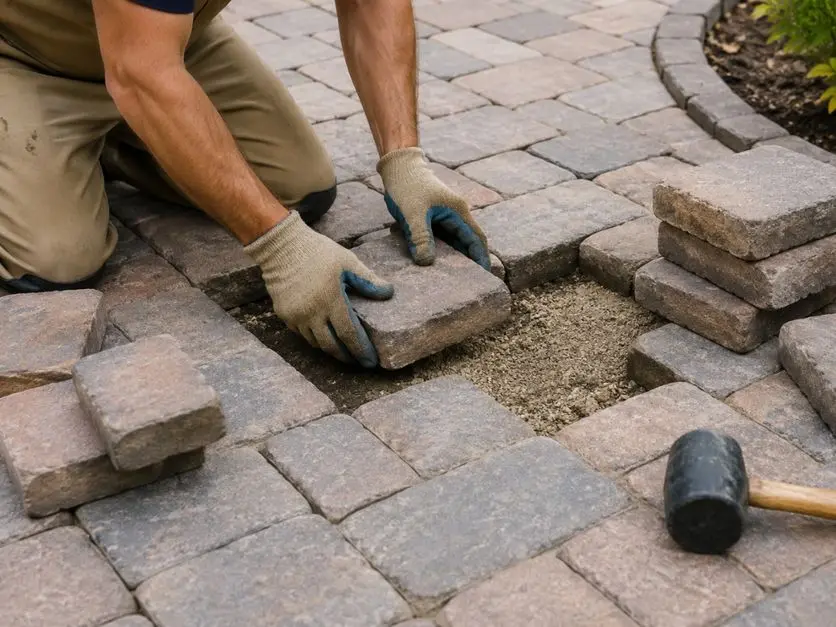
Once the base and edges are ready, it’s time to lay the pavers. Spread about one inch of bedding sand evenly over the compacted base and level it with a straight edge.
Start from one corner of the pool area, following your layout pattern. Keep the spacing even, as spacers help maintain alignment. Cut-edge pieces with a wet saw to ensure a clean, tight fit.
Work in small sections, checking your level frequently. Consistency here gives you that clean, professional finish.
Compacting and Sand Filling
After laying all the pavers, use a plate compactor (with a protective mat) to press them firmly into place. This step locks them in and reduces future movement.
Next, sweep polymeric sand into the joints between pavers. Lightly mist the area with water to activate the binding agent, but avoid overwatering. You want the sand to set, not wash away.
Let everything cure for 24–48 hours before using the pool area.
Installing Drainage Systems
Good drainage is essential for any pool deck. Without it, water can collect, cause pavers to shift, and promote algae growth.
Consider adding channel drains or French drains to redirect water away from the pool. Maintain the proper slope for runoff and ensure the base layers allow water to filter through naturally.
Once installation is complete, ask your contractor to perform a quick drainage test before sealing the surface. This small step can prevent long-term issues.
Sealing and Maintenance
Not every paver needs sealing, but applying a protective coat helps preserve color and prevent stains. Wait at least 2–4 weeks after installation to allow moisture to evaporate before sealing.
Use a penetrating sealer for natural stone or a film-forming sealer for concrete. Reapply every few years based on how much sun and foot traffic the deck gets.
For maintenance, sweep debris regularly, rinse occasionally, and treat spills quickly with mild cleaners. Simple upkeep will help your pool deck maintain its color and structure for years.
Common Mistakes to Avoid
Even with a good plan, small mistakes can cause long-term damage. Avoid these common errors.
- Not compacting the base thoroughly
A weak base leads to sinking and uneven pavers. Compact each layer of soil and base material to build a solid foundation. - Ignoring slope requirements
Without a proper 1–2% slope, water collects around the pool, causing erosion and surface damage. Always grade for good drainage. - Choosing dark pavers that retain too much heat
Dark colors absorb heat quickly. Choose lighter shades or Belgard® heat-resistant options to keep surfaces cooler underfoot. - Rushing sealing, or using the wrong sealer
Seal too early, and moisture gets trapped. Wait a few weeks and use the correct sealer for your paver type to protect the surface properly. - Skipping edge restraints
Edge restraints prevent pavers from spreading over time. Install concrete, metal, or plastic edging to keep your deck aligned and secure.
Paying attention to these details during installation saves time, money, and frustration later. That’s exactly what Eli’s Paver Patios is known for. With years of experience and a commitment to quality, our team installs Belgard® pavers with the precision and care they’re designed for. From planning to finishing touches, we make sure your pool deck not only looks great but performs beautifully for years to come.
Final Thoughts
A well-built pool deck does more than frame your pool; it adds comfort, safety, and value to your home. With durable Belgard® pavers and expert installation from Eli’s Paver Patios, you can create a space that looks beautiful and performs well season after season. Every detail, from design to drainage, is handled with precision so your pool area stays functional, stylish, and built to last.