Porcelain pavers are a popular choice for homeowners who want a clean, modern outdoor space that holds up over time. The finish looks refined, the material resists wear, and the overall result feels like an upgrade from traditional options.
But once you move past the design, the focus shifts to installation. How porcelain pavers are installed, whether on soil, concrete, or pedestals, has a direct impact on how the surface performs. Getting that part right is what separates a patio that lasts from one that starts showing issues sooner than expected.
What Makes Porcelain Pavers Different?
Porcelain pavers are dense, rigid, and manufactured with very tight dimensional tolerances, which gives them a cleaner, more refined finish than many other paving materials. However, it also means the installation has to be equally precise. Small errors in base preparation, grading, or spacing are harder to hide once the surface is complete.
Unlike concrete pavers, porcelain does not absorb minor irregularities well. If the base is slightly off, you are more likely to see lippage, uneven joint lines, or areas that feel inconsistent underfoot. The material is not the problem in those cases; the issue is that porcelain is less forgiving, so the installation standard has to be higher from the start.
A successful porcelain paver installation should focus less on just laying the pavers and more on controlling base depth, compaction, slope, and support.
Porcelain Paver Installation on Concrete
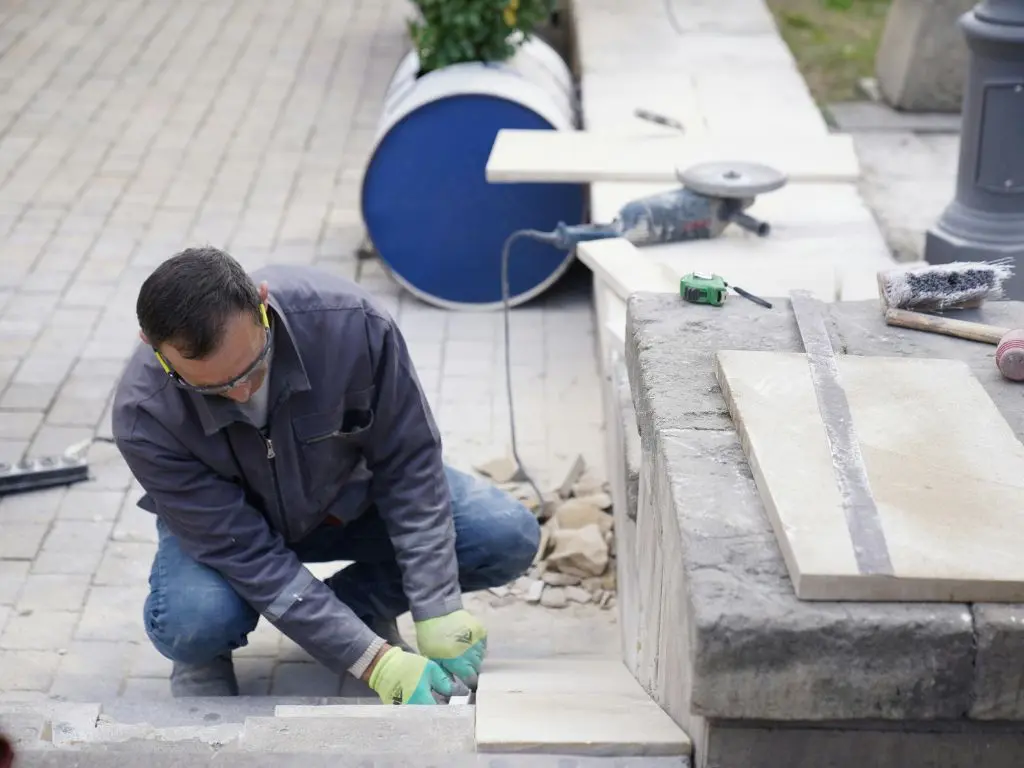
Installing porcelain pavers over concrete can work well when a slab is already in place. It reduces site work and provides a stable base, but only if the slab is in good condition.
A concrete slab should always be evaluated before installation. Cracks, poor drainage, or uneven areas can carry over to the new surface and affect long-term performance.
Concrete often feels like the safer option, but that is not always the case. If water pools or the slab has shifted, those issues will not go away just because pavers are installed on top.
Typical installation steps include:
- Inspecting the slab for cracks and drainage issues
- Cleaning and preparing the surface
- Correcting slope or low spots if needed
- Applying the chosen setting method
- Placing and aligning the pavers
- Final drainage and surface checks
Once your patio is installed, ongoing care becomes the next priority. For a closer look at how to protect your investment and keep your outdoor space looking its best, read our blog, Maintenance After Custom Paver Patio Installation: What You Really Need to Know.
Do Porcelain Pavers Need to be Laid on Concrete?
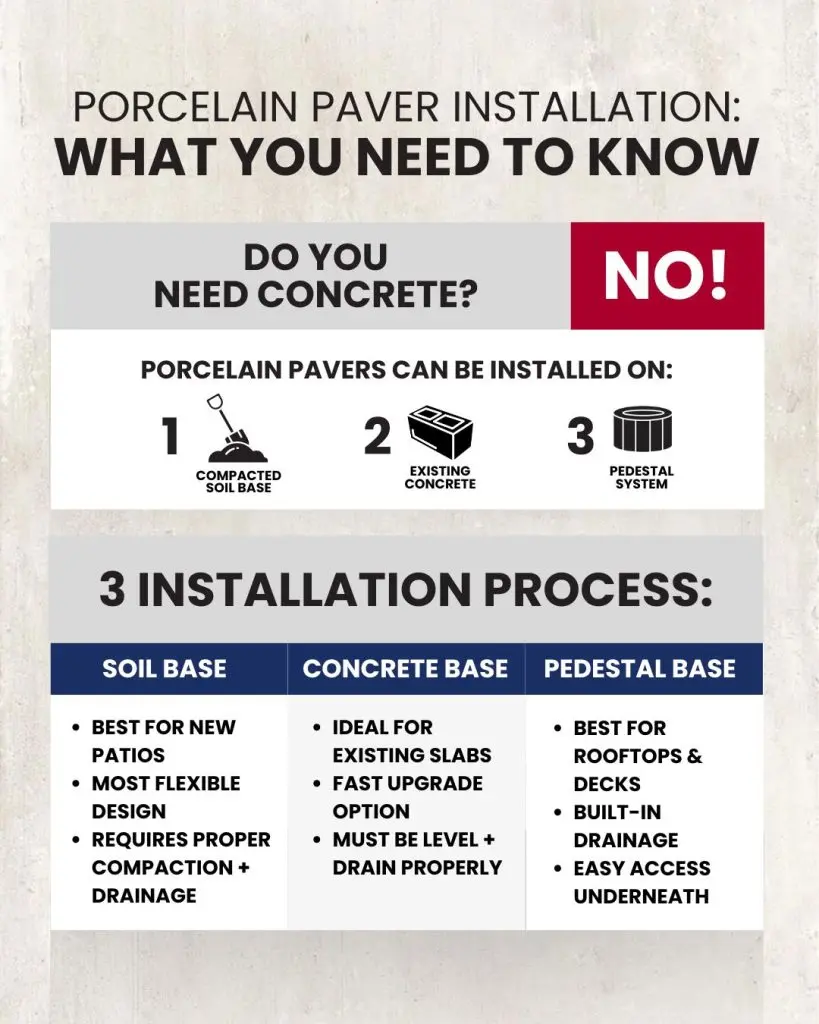
No, porcelain pavers do not need to be laid on concrete. They can be installed on a properly prepared aggregate base, over an existing concrete slab, or on pedestal systems, depending on the site. The best option depends on drainage, base stability, and how the space will be used.
Porcelain Paver Installation on Soil
Many homeowners hear “install on soil” and assume porcelain pavers go directly over dirt. That is not how a proper porcelain paver installation works. Soil is only the starting point; the real structure is built above it.
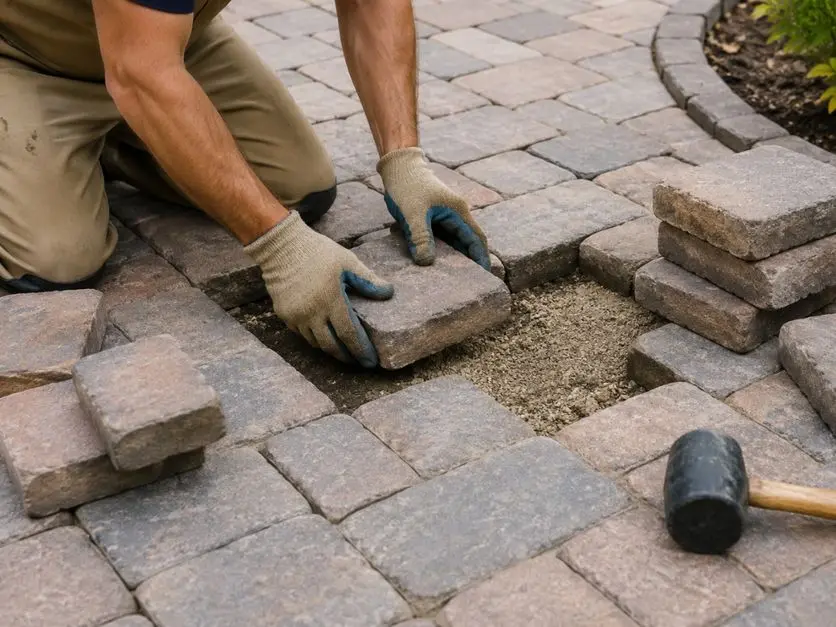
A soil installation is a base-building process. The area is excavated, compacted, and rebuilt with layered materials so the pavers have consistent support. When done correctly, this method can perform just as well as concrete for most residential patios.
This approach works best for new patios, walkways, and backyard spaces where you are building from scratch. It gives you more flexibility in layout and elevation compared to working over an existing slab.
The performance of the patio comes from the base, not the pavers. A properly built system prevents shifting, low spots, and drainage issues, while a rushed base leads to movement that shows up over time.
Typical installation steps include:
- Excavating to the required depth
- Compacting the subgrade
- Installing and compacting a crushed stone base
- Adding a setting bed for leveling
- Placing and spacing the porcelain pavers
- Installing edge restraints
- Final leveling and drainage check
This method requires attention to detail. When compaction, slope, or materials are off, porcelain will expose those issues quickly.
Porcelain Paver Installation on Pedestals
Pedestal systems are less common but solve specific problems well. Instead of sitting on a base, porcelain pavers are supported by adjustable pedestals, creating a raised surface.
This setup changes how the system handles water. Instead of running across the surface, water drains through the joints and below the pavers, making this ideal for rooftops, balconies, and elevated decks.
Another advantage is access. Individual pavers can be lifted to reach drains, wiring, or utilities without disturbing the entire installation.
Typical installation steps include:
- Evaluating the substrate for stability
- Planning pedestal layout and elevations
- Placing and adjusting pedestals
- Setting pavers on pedestal supports
- Aligning and leveling the surface
- Making final height adjustments
Pedestal systems are not necessary for every project. But in the right setting, especially where drainage and access matter, they offer a more controlled and serviceable solution than traditional methods.
Final Thoughts
Porcelain pavers can give your outdoor space a clean, polished look, but the installation method is what determines how well the surface performs over time. Choosing the right base for your site helps prevent drainage issues, movement, and uneven settling later on.
At Eli’s Paver Patios, we help homeowners choose the right porcelain paver installation method based on their space, drainage, and long-term goals. That way, your patio not only looks good when it is finished, but continues to perform the way it should.