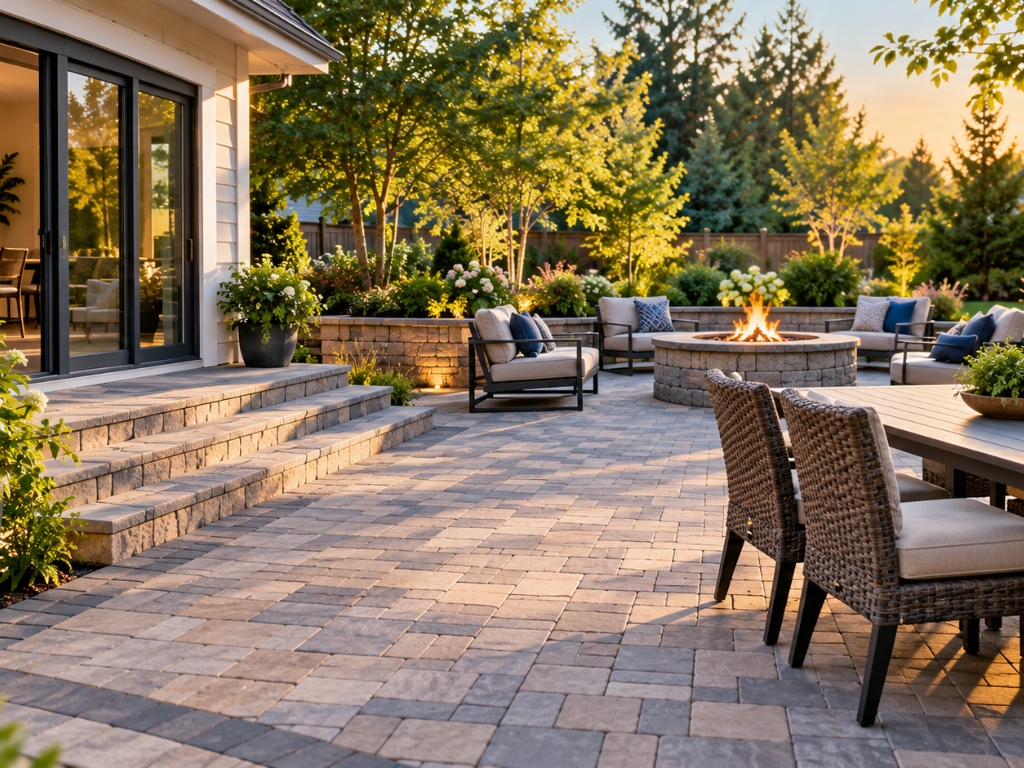
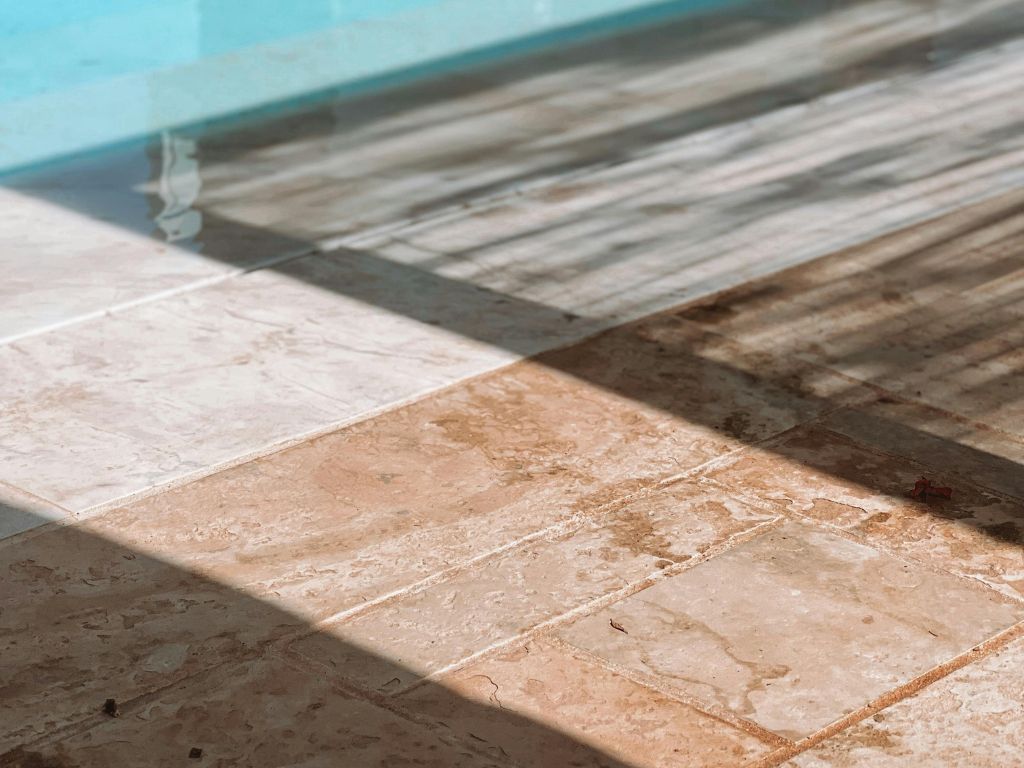
Choosing between porcelain pavers and concrete pavers affects how your outdoor space looks, performs, and holds up over time. Both materials are widely used for patios, walkways, and pool decks, but they behave very differently once installed.
If you are planning a new patio or upgrading an existing one, you need to understand how each option performs in real conditions. This guide breaks down the key differences so you can make a decision that fits your space, budget, and maintenance expectations.
What is a Porcelain Paver?
Porcelain pavers are manufactured using refined clay and minerals that are fired at extremely high temperatures. This process creates a dense, non-porous material that resists water, stains, and wear.
Unlike traditional pavers, porcelain is designed to mimic natural materials like stone or wood while offering more consistent performance. You will often see them used in modern outdoor designs because of their clean finish and uniform appearance.
Porcelain pavers are typically thinner than concrete but much stronger due to the firing process. Most porcelain pavers are around ¾ inch thick and engineered to handle foot traffic and even light vehicular loads when installed properly.
You also get a wide range of styles. Manufacturers produce finishes that replicate marble, slate, or wood grain, allowing you to match your outdoor space with your home’s design without the maintenance of natural materials.
How Long Do Porcelain Pavers Last?
Porcelain pavers are built for long-term performance. When installed correctly, they can last 20 to 50 years or more with minimal signs of wear.
Their low water absorption plays a major role in their lifespan. Because moisture cannot penetrate the surface easily, you avoid many of the issues that shorten the life of other materials, such as cracking or shifting.
They also resist UV damage. This means the color you choose will remain stable over time, even in areas with strong sun exposure. You won’t see the same level of fading that often occurs with concrete.
In high-traffic areas like patios or walkways, porcelain maintains its structure without breaking down. This makes it a reliable option if you want a surface that performs consistently year after year without frequent repairs.
Porcelain Pavers vs Concrete Pavers: Core Differences
When comparing porcelain pavers to concrete pavers, the differences come down to performance, maintenance, and long-term value.
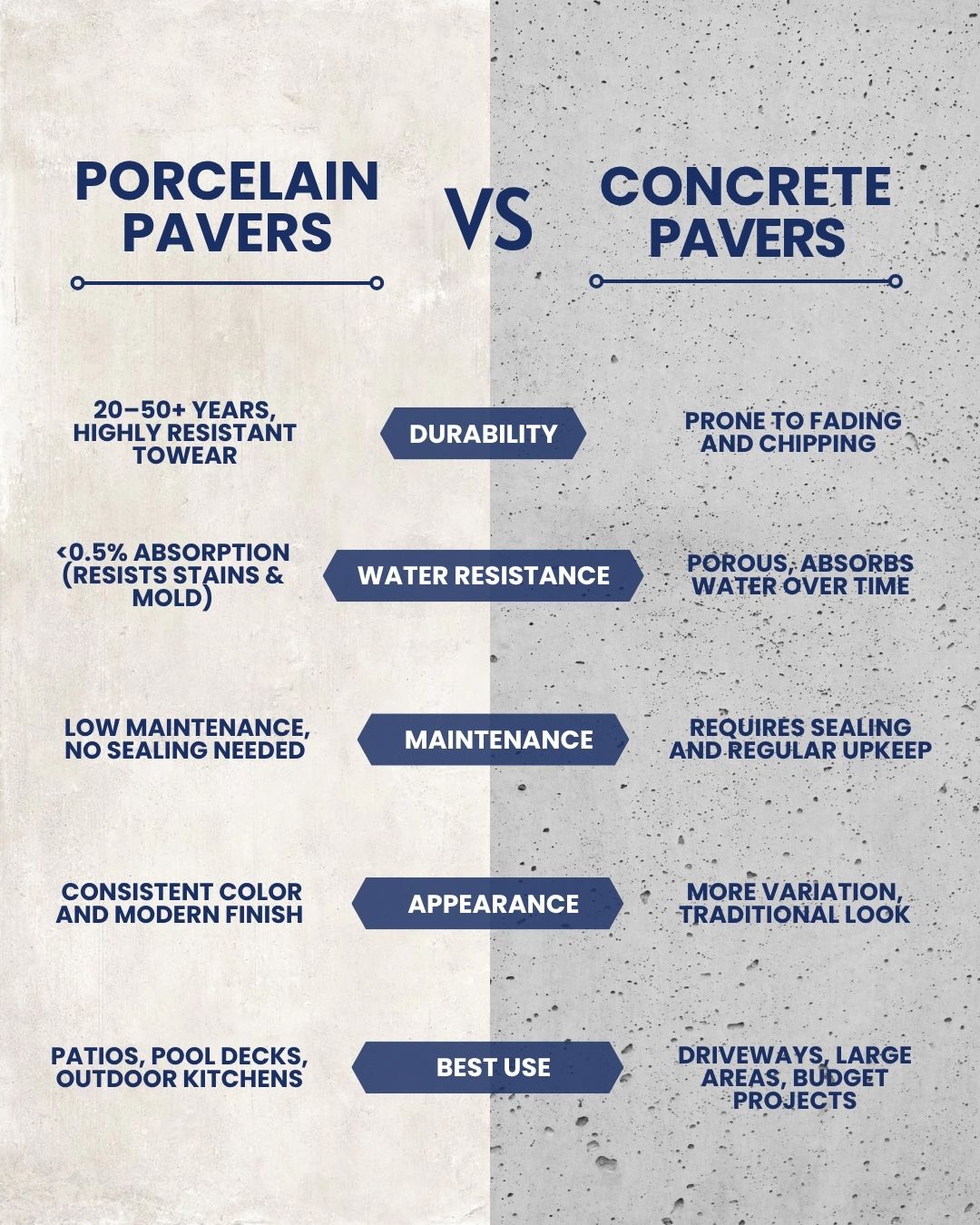
- Water Absorption
Porcelain pavers absorb less than 0.5% of water. This makes them highly resistant to moisture-related damage like cracking or mold growth. Concrete pavers, on the other hand, are porous. They can absorb water, which may lead to staining, erosion, or freeze-thaw damage over time.
- Durability
Porcelain is extremely dense and resistant to scratches and surface wear. It holds its color well even with constant sun exposure. Concrete pavers are durable but more prone to surface wear, fading, and chipping, especially in high-traffic areas.
- Maintenance
Porcelain pavers require minimal upkeep. Most spills stay on the surface, making them easy to clean with water and mild soap. Concrete pavers need more attention. You may need to seal them regularly to prevent stains and extend their lifespan.
- Appearance Consistency
Porcelain pavers are manufactured, so each piece looks consistent in size, color, and finish. Concrete pavers can vary slightly, which may create a more natural look but can also result in inconsistencies across your patio.
- Installation Flexibility
Concrete pavers are thicker and often easier to install for standard projects. Porcelain pavers require a more precise installation process, especially when using pedestal systems or sand-set methods.
When Porcelain Pavers Make More Sense
Porcelain pavers make more sense when you want a surface that looks polished and stays easy to maintain over time. They work especially well in patios, pool decks, and outdoor kitchens where water, spills, and daily use are common.
Because porcelain absorbs very little moisture, it resists staining, mold growth, and weather-related damage better than many other materials. It also holds its color well in direct sun, which helps your outdoor space keep a consistent look.
If you want a clean, modern finish without the need for regular sealing or heavy upkeep, porcelain pavers are often the better investment.
When Concrete Pavers May Be the Better Choice
Concrete pavers may be the better choice when your project needs a more budget-friendly material that still delivers solid performance.
They are often used for driveways, walkways, and larger patio areas because they can handle weight well and come in many shapes, textures, and colors. Concrete is also easier to cut and adjust during installation, which can help with custom layouts or challenging spaces.
If you prefer a more traditional appearance, concrete gives you plenty of design flexibility. You should keep in mind that it usually needs more maintenance, including sealing, cleaning, and occasional repairs as the years go on.
Final Thoughts
Porcelain pavers offer a clean look, strong durability, and less maintenance over time, which makes them a smart choice for many homeowners. Concrete pavers can still be a good fit if you want a lower upfront cost and more flexibility in design, but they usually require more upkeep as the years go on.
If you are comparing options for your patio project, Eli’s Paver Patios can help you choose a solution that fits your home and goals.