Your pavers do a lot of heavy lifting.
They support foot traffic, outdoor furniture, vehicles, pets, and everything in between. They sit in the sun all summer, absorb moisture during rainy months, and collect dirt and debris year-round. Over time, all of that exposure adds up.
Most hardscape problems don’t appear overnight. They start quietly as washed-out joints, slight movement, small stains, and they grow when they’re ignored. Seasonal paver maintenance helps you spot those early warning signs and address them before repairs become expensive or disruptive.
What Kind of Maintenance Do Pavers Need?

Pavers are durable by design, but they’re not maintenance-free.
A properly installed paver surface works as a system. The pavers sit on a compacted base, are locked together by joint sand, and rely on proper drainage to stay stable. When one part of that system starts to fail, the surface shows it.
Routine paver maintenance focuses on protecting that system rather than reacting to visible damage.
Preventative Surface Cleaning
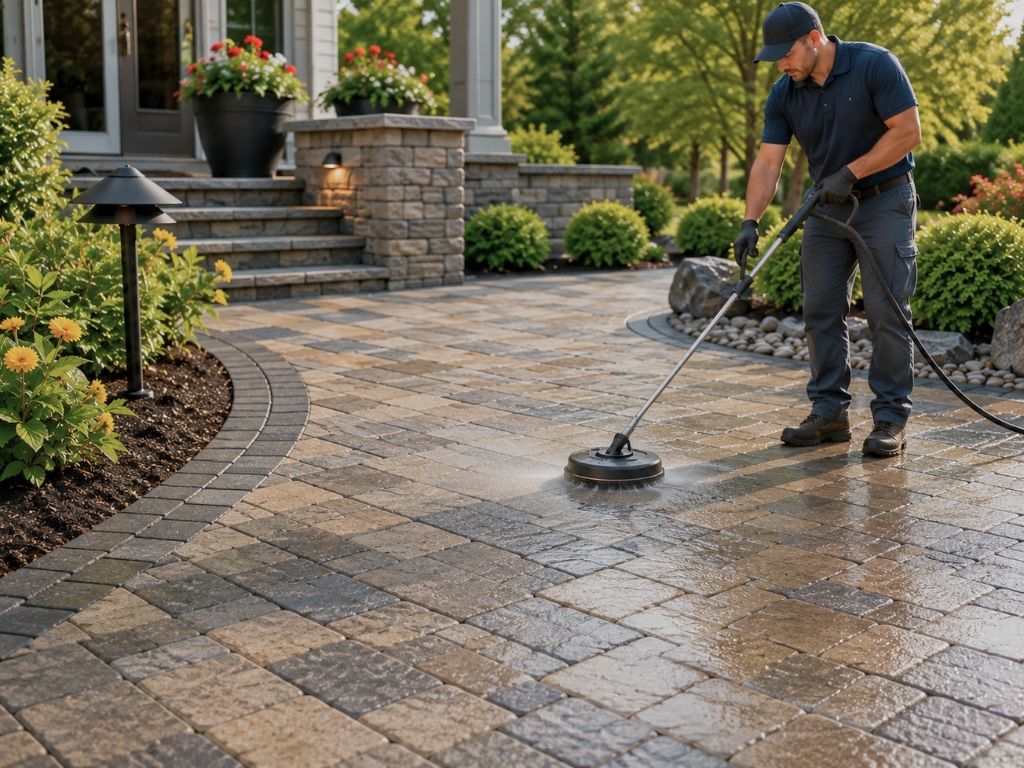
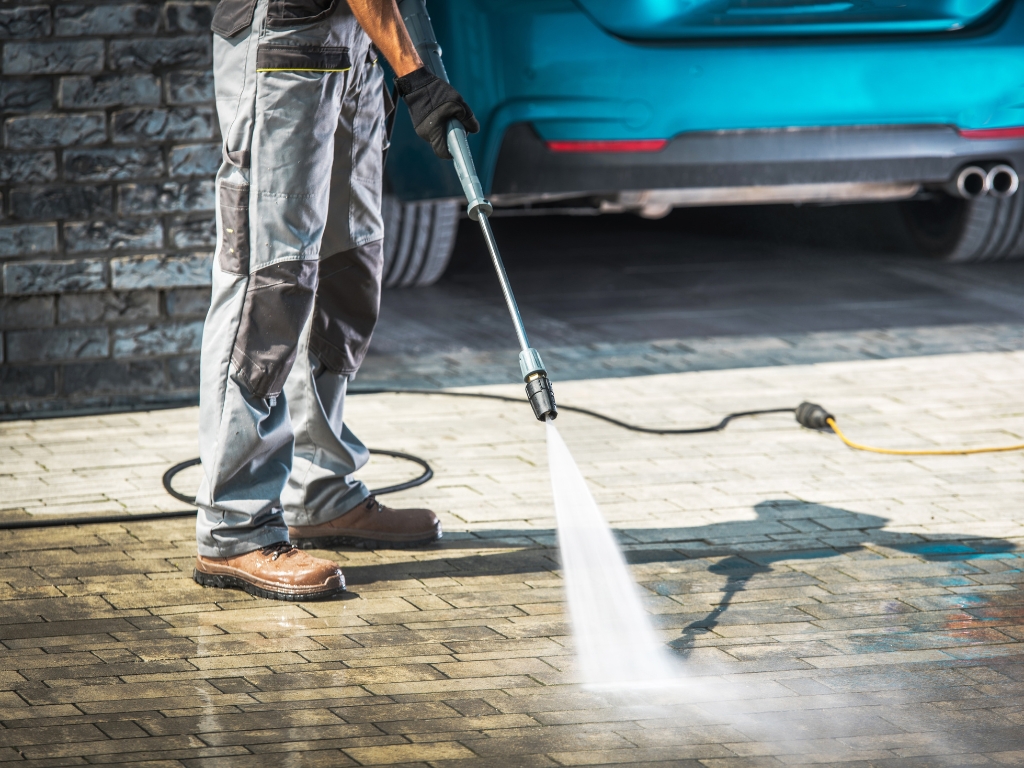
Surface cleaning prevents many paver problems before they start. Dirt, leaves, and organic debris may seem minor, but they trap moisture and create the conditions weeds, algae, and stains need to develop.
As debris breaks down, moisture settles into textured surfaces and joints, slowly weakening the system that holds your pavers in place. Regular cleaning interrupts this cycle early, keeping your hardscape drier, cleaner, and easier to maintain over time.
Stable Joint Sand Support
Joint sand plays a critical role in keeping pavers locked together and stable under everyday use. As seasons change, sand naturally washes out from rain, irrigation, foot traffic, and improper pressure washing.
When joints begin to empty, pavers lose structural support, which leads to movement and uneven surfaces. Addressing joint sand loss early helps prevent tripping hazards, drainage issues, and more extensive repairs later.
Protective Paver Sealing
Paver sealing adds an extra layer of protection when applied at the right time and under the right conditions.
While not required for every surface, sealant can help reduce staining, slow weed growth, and protect against moisture penetration. It can also enhance color consistency, helping your hardscape maintain a uniform appearance.
Sealing should only be done once pavers are clean, dry, and structurally sound, as sealing over existing issues often leads to hazing or peeling.
Spring
Spring is the best time to evaluate how your pavers handled the offseason. Cooler weather and limited use often hide small issues that become obvious once temperatures rise and outdoor spaces see more activity.
- Surface Level Inspection
Walk slowly across your patio, driveway, or walkways and pay attention to changes in height or stability. If an area feels uneven or rocks underfoot, mark it so it can be addressed before water continues to weaken the base below. - Winter Debris Removal
Use a stiff broom or leaf blower to clear away leaves, dirt, and organic buildup from the surface and joints. Focus on corners, edges, and shaded areas where debris tends to collect and moisture lingers. - Joint Sand Assessment
Look closely at the joints between pavers to see if sand is missing, uneven, or compacted below the surface. Refill joints during dry weather so new sand settles properly and restores the locking system. - Drainage Pattern Review
After spring rain, observe how water moves across your pavers and where it collects. Standing water or erosion along edges indicates drainage issues that may require grading or edge reinforcement. - Edge Restraint Check
Inspect the outer edges of your pavers for signs of spreading or separation. Secure loose edge restraints early to prevent seasonal expansion from pushing pavers out of alignment.
Summer
Summer places constant stress on your hardscape through heat, UV exposure, and heavy foot traffic. Maintenance during this season focuses on protecting surfaces and preventing accelerated wear.
- Immediate Spill Cleanup
Keep a bucket of water or mild cleaner nearby during outdoor gatherings to address spills quickly. Blot stains instead of scrubbing aggressively to avoid pushing residue deeper into the surface. - Furniture Contact Protection
Add protective pads to the legs of chairs, tables, and grills that sit on pavers. When rearranging furniture, lift instead of dragging to prevent scratches and joint sand displacement. - UV Exposure Monitoring
Pay attention to areas that receive direct sunlight all day and compare them to shaded sections. Uneven fading may indicate that sealing could help preserve color consistency in the future. - Joint Sand Stability Checks
Inspect joints monthly during high-use periods, especially along walkways and gathering areas. If sand appears low or loose, plan for re-sanding before movement becomes noticeable. - Post-Storm Surface Review
After heavy rain, check for washed-out joints, puddling, or exposed edges. Addressing erosion early prevents water from reaching the base layer beneath the pavers.
Fall
Fall is when preventative paver maintenance provides the most long-term benefit. Increased moisture and falling leaves make this the most important season to protect your hardscape before winter arrives.
- Frequent Leaf Removal
Sweep or blow leaves off pavers regularly instead of letting them sit and decompose. Removing them quickly prevents staining and reduces moisture trapped against the surface. - Cracked Paver Replacement
Inspect pavers closely for small cracks or chips that may worsen during freezing temperatures. Replacing damaged units now prevents water from entering and expanding during freeze-thaw cycles. - Surface Re-Leveling
Look for low or uneven areas that may collect water during rain. Correcting these sections before winter helps prevent ice formation and further movement. - Edge Reinforcement
Check edge restraints for gaps, bending, or looseness caused by seasonal shifts. Reinforcing them in the fall helps maintain alignment through colder, wetter months. - Sealing Preparation Or Application
If sealing is planned, thoroughly clean the surface and allow it to dry completely before application. Fall’s cooler temperatures help sealant cure evenly and bond properly.
Winter
Winter maintenance focuses on minimizing damage and monitoring changes rather than making repairs. Small choices during this season have a big impact on how well your pavers hold up.
- Non-Corrosive Traction Use
Apply sand sparingly to icy areas to improve traction without damaging the surface. Avoid salt-based products that break down concrete and joint materials. - Surface-Safe Snow Removal
Use plastic or rubber-edged shovels to clear snow without chipping paver edges. Push snow gently instead of scraping aggressively to protect the surface finish. - Freeze-Thaw Movement Monitoring
Periodically check for pavers that shift or rise after temperature changes. Make note of problem areas so repairs can be scheduled once conditions improve. - Joint Moisture Awareness
Watch for joints that remain wet longer than the surrounding areas, as this may signal drainage issues. Excess moisture increases the risk of movement during freeze-thaw cycles. - Traffic Limitation During Freezes
Limit heavy foot traffic or vehicle use during freeze-thaw periods when the ground is unstable. Reducing stress during these times helps prevent cracking and displacement.
Why Preventive Paver Maintenance Matters
Most hardscape problems don’t start with obvious damage. They usually begin with small issues like missing joint sand, minor surface movement, or poor drainage that are easy to overlook. When left unaddressed, these problems can lead to uneven patios, cracked pavers, and costly base repairs.
Routine paver maintenance helps catch these issues early, protecting your investment, extending the life of your hardscape, and keeping your outdoor space safe and visually consistent.
If you’re unsure what your pavers need, a professional inspection can help identify risks early. Eli’s Paver Patios works with homeowners to maintain and protect hardscapes before small issues turn into major repairs.