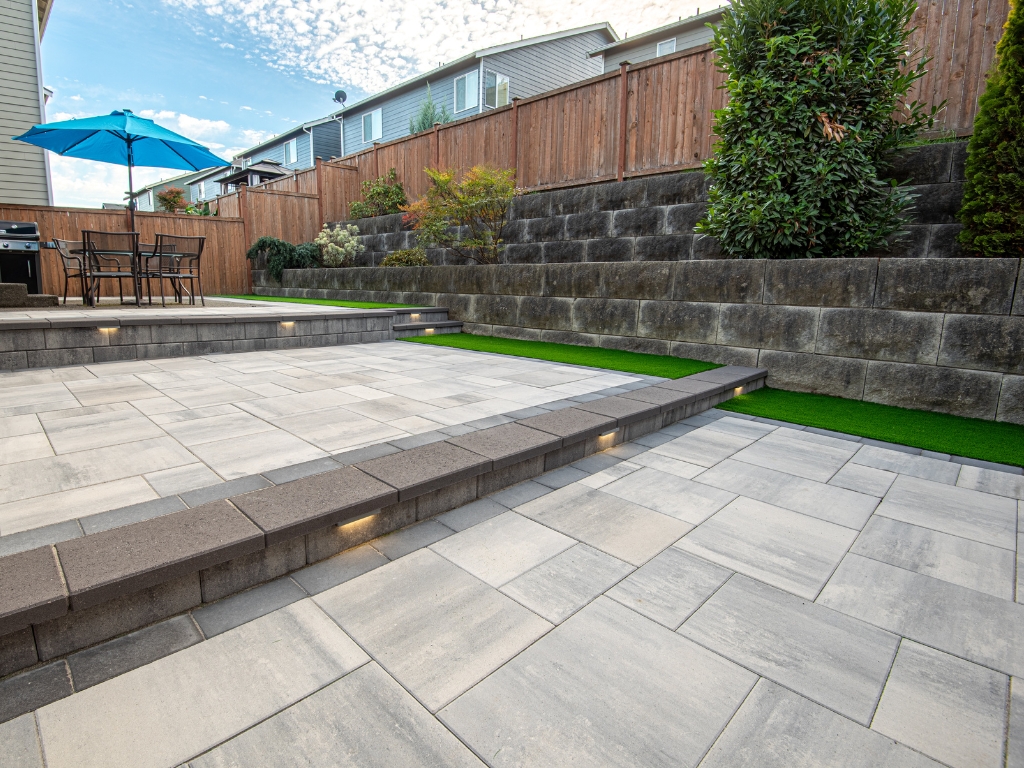

When planning a landscaping project, many homeowners face the choice of pavers vs concrete. While both have their advantages, pavers offer several benefits that make them a better choice for patios, walkways, and driveways.
With Eli’s Paver Patios‘ expertise, let’s dive into why pavers could be the perfect choice for your home.
Key Takeaways
- Design Versatility: Pavers offer a variety of colors, patterns, and textures, providing more customization options for outdoor spaces than concrete, which has limited aesthetic choices.
- Durability and Maintenance: Pavers are more durable than concrete and easier to repair; replacing a damaged paver is simple, while concrete repairs often require costly patching or repouring.
- Safety and Comfort: Pavers provide better slip resistance and stay cooler underfoot, making them ideal for pool decks and other areas where safety and comfort are important.
- Environmental Benefits: Pavers reduce water runoff and help mitigate heat island effects due to their permeability, offering a more eco-friendly option compared to concrete.
- Investment Value: Although the initial cost of pavers may be higher than concrete, they offer better long-term value through enhanced property appeal and lower maintenance requirements.
Understanding Pavers and Concrete
Deciding between pavers and concrete for your outdoor space can feel overwhelming. Here, we’ll break down the differences between the two so you can choose the option that best suits your style, needs, and budget.
Pavers
Pavers are incredibly versatile, offering a range of materials, colors, and patterns to fit any design aesthetic.

- Materials: Pavers can be made from natural stone, brick, or concrete, each bringing a distinct look and feel to your landscape design. Natural stone pavers, such as limestone or slate, offer elegance, while brick pavers provide a timeless, classic charm. Concrete pavers are highly durable and come in a variety of colors and finishes.
- Design: With pavers, you have endless possibilities for patterns and styles. From a sophisticated herringbone pattern to a more intricate circular design, pavers allow you to tailor your outdoor space to reflect your personal taste. This flexibility is ideal for homeowners who want to add unique features, such as a winding pathway or a quaint, European-style patio.
- Texture and Color: Pavers offer a vast spectrum of colors and textures, from smooth finishes to rugged, natural looks. This variety enables you to match or contrast your outdoor paving with the architectural style of your home, creating a cohesive and appealing aesthetic.
Whether you desire a rustic cobblestone look or a sleek modern finish, pavers provide the flexibility to create a personalized outdoor space.
Concrete
Concrete is known for its uniform appearance and functional benefits, making it a popular choice for many homeowners looking for a straightforward solution.

Uniformity: Concrete provides a smooth, consistent surface that fits well with modern, minimalist designs. Its monolithic appearance is often favored for its simplicity and ease of integration into various landscape settings.
- Color and Finish Options: While traditional concrete may seem limited to a basic grey, advancements in concrete technology have expanded the options. Stamped concrete can mimic the look of natural stone, brick, or even wood, offering more design flexibility than previously available. Additionally, color can be added to concrete, providing a range of hues, though typically less varied than pavers.
Application Examples
Imagine a homeowner looking to create a Mediterranean-style outdoor space. Pavers could offer terracotta-toned stones arranged in a rustic pattern, evoking the charm of a Tuscan villa.
In contrast, a homeowner seeking a sleek, contemporary look might opt for large, smooth concrete slabs with a polished finish, reflecting modern minimalism.
So, which is better?
In summary, pavers offer unmatched creativity and customization with a wide range of materials, colors, and patterns. Concrete, while more uniform, provides a reliable and consistent foundation that can be customized only to some extent.
Both materials have unique appeals depending on the homeowner’s vision and intended use of the space.
At Eli’s Paver Patios, we specialize in bringing these visions to life, particularly with the versatile and dynamic option of pavers.
10 Reasons to Choose Pavers
Let’s explore the top 10 reasons why choosing pavers over concrete can transform your landscape into a beautiful, functional, and long-lasting space.
1. Aesthetic Appeal and Design Flexibility
At Eli’s Paver Patios, we emphasize personal expression. Patio pavers offer a wide range of colors, shapes, and patterns, providing more design options than a concrete patio. Concrete, while practical, lacks the customization available with pavers.
When comparing pavers vs concrete, the ability to customize makes pavers a superior choice for enhancing outdoor spaces.
2. Durability and Longevity
Our pavers are designed to endure harsh conditions and heavy use. Unlike a concrete slab, which can crack with temperature changes, our pavers retain their strength and appearance, making them ideal for high-traffic areas.
Paving stones offer better durability than stamped concrete, especially in varying climates.
3. Maintenance and Repair Ease
Replacing a damaged paver is quick and keeps your space looking great. In contrast, repairing concrete is often more extensive, requiring noticeable patching or repouring.
This makes pavers easier to maintain than poured concrete, particularly when considering pavers vs stamped concrete for low-maintenance options.
4. Safety
Pavers are safer due to their slip resistance and cooler surfaces, ideal for pool decks. A concrete patio might be more slippery when wet, making patio pavers vs concrete a consideration for safer outdoor areas.
5. Environmental Impact
Our pavers support sustainability with better water permeability than a concrete slab, reducing runoff and aiding the environment. When evaluating pavers vs concrete patio options, pavers typically offer more eco-friendly benefits.
6. Cost and Long-term Value
Is it cheaper to lay concrete or pavers? Concrete costs per square foot are generally lower initially, appealing for a quick fix. However, installing pavers often proves more cost-effective over time due to durability and lower maintenance.
| Pavers | Concrete | |
| Initial Cost | Higher upfront cost: $10 to $20 per square foot (up to $30 for high-end options) | Lower upfront cost: $4 to $8 per square foot (up to $12 for stamped concrete) |
| Long-term Value | Offers better long-term value due to durability, low maintenance, and potential property value increase | Has lower long-term value due to higher maintenance costs and potential need for repairs |
When considering pavers vs concrete, remember that long-term savings with pavers can outweigh the initial cost difference.
Are pavers cheaper than concrete? In the long run, they often are.
7. Installation Process and Time
Installing pavers is more time-intensive than pouring concrete but results in a more attractive, durable finish.
Though paver installations may take longer, the quality and longevity of pavers make the extra effort worthwhile.
8. Resale Value and Curb Appeal
Paver installations boost curb appeal and can increase resale value, offering more aesthetic appeal than a concrete patio.
Between concrete pavers and poured concrete, pavers generally enhance property value more effectively.
9. Customization and Personalization
Paving stones offer endless customization options, unlike the limited nature of poured concrete. When choosing between stamped concrete vs pavers, pavers provide more flexibility to create unique designs.
10. Flexibility in Weather Conditions
Pavers adapt better to weather changes, allowing for expansion and contraction without cracking. When considering pavers vs stamped concrete, a concrete slab may crack in extreme conditions, making pavers a better choice for regions with harsh weather.
| Aspect | Pavers | Concrete |
| Aesthetic Appeal and Design Flexibility | Wide range of colors, shapes, patterns; high customization | Limited design options |
| Durability and Longevity | Withstands harsh conditions; retains appearance; better in varying climates | Prone to cracking; less durable in temperature changes |
| Maintenance and Repair Ease | Easy to replace individual pavers; low maintenance | Extensive repairs; costly patching or repouring |
| Safety | Better slip resistance; cooler surfaces; ideal for pool decks | Slippery when wet; safety concerns |
| Environmental Impact | Better water permeability; reduces runoff; eco-friendly | Less permeable; more runoff; environmental impact |
| Cost and Long-term Value | Higher initial cost ($10-$20 per sq. ft., up to $30); better long-term value; lower maintenance | Lower initial cost ($4-$8 per sq. ft., up to $12); higher long-term costs; frequent repairs |
| Installation Process and Time | Time-intensive installation; durable and attractive finish | Faster installation; less attractive over time |
| Resale Value and Curb Appeal | Enhances curb appeal; increases resale value | Less impact on property value |
| Customization and Personalization | Endless design options; high flexibility | Limited customization; fewer options even with stamping |
| Flexibility in Weather Conditions | Adapts to weather changes; resists cracking; ideal for extreme climates | Prone to cracking in extreme conditions; less adaptable |
Final Thoughts
Choosing between pavers and concrete is a significant decision in enhancing your home’s outdoor space. Opting for pavers means choosing flexibility, durability, and a personal touch that concrete can’t match.
For more inspiration and expert advice, visit our website and let us help transform your outdoor area into a beautiful, valuable, and eco-friendly haven.
FAQs
How long do paver installations typically last compared to concrete?
Paver installations can last for decades with proper maintenance, often outlasting concrete due to their resistance to cracking and easier repair.
Are pavers more environmentally friendly than concrete?
Yes, pavers are more environmentally friendly as they allow water to permeate, reducing runoff and mitigating heat island effects.
Can I match pavers to the color and style of my home?
Absolutely! Pavers come in a wide selection of colors and styles, making it easy to complement your home’s aesthetic.
Is the installation process for pavers longer than for concrete?
Paver installation can take longer due to its intricacy, but it results in a more durable and aesthetically pleasing finish.
Will pavers increase my home’s resale value?
Yes, pavers can significantly boost your home’s resale value due to their aesthetic appeal and durability.
Conclusion
Choosing between pavers and concrete is a significant decision in your home’s journey. With Eli’s Paver Patios’ expertise, choosing pavers means opting for flexibility, durability, and a personal touch that concrete can’t match.
Visit our website for more inspiration and expert advice. Let us help you transform your outdoor space into a personalized, valuable, and eco-friendly haven. Happy landscaping!