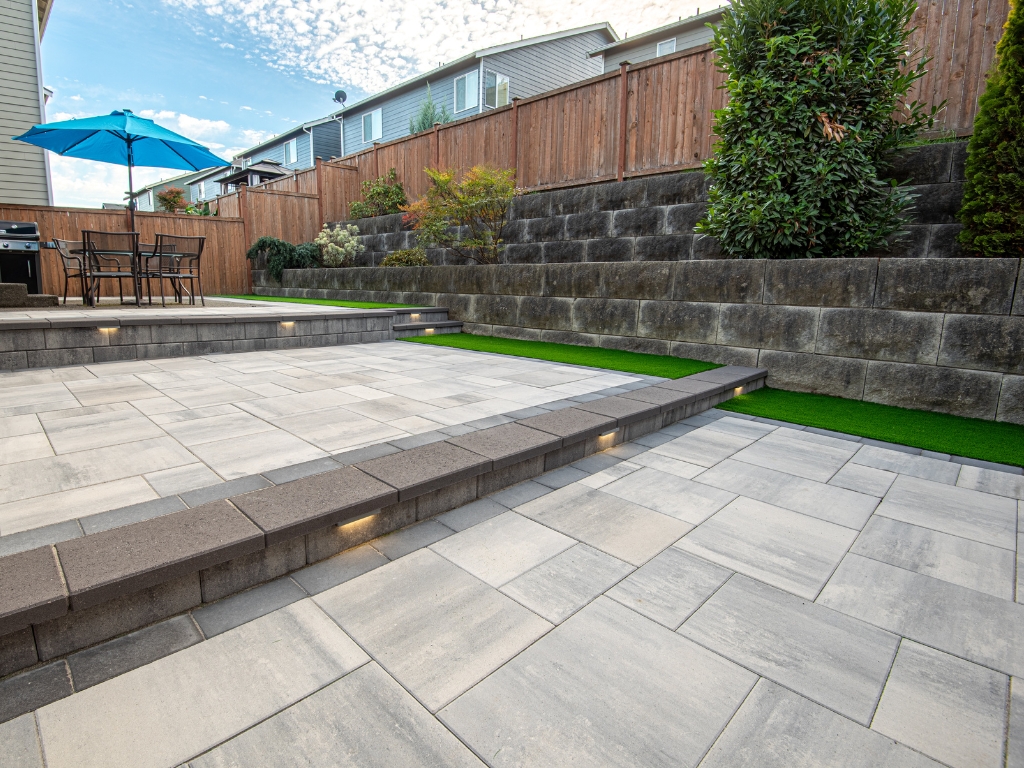

Thinking about adding a walkway to your yard? Great idea. Paver walkways don’t just connect spaces; they also shape how your outdoor area feels and functions.
But before you start picking out colors and patterns, there are a few things you should know. A well-planned walkway looks better, lasts longer, and saves you from costly mistakes down the road.
Let’s break it down.
Start With the “Why”
First, what’s the goal of this walkway?
Are you trying to create a straight shot to the front door? A winding path through your garden? A casual trail to the firepit out back?
Knowing where it leads (and why it matters) makes every other decision easier. A main entry path might need to be wide, well-lit, and formal. A backyard trail? More relaxed and playful.
Here’s a quick tip: lay a garden hose or rope where you think the path should go. Walk it a few times. Does it feel natural? Does it cut corners too sharply or bump into flower beds? You’ll know pretty quickly if the layout works.
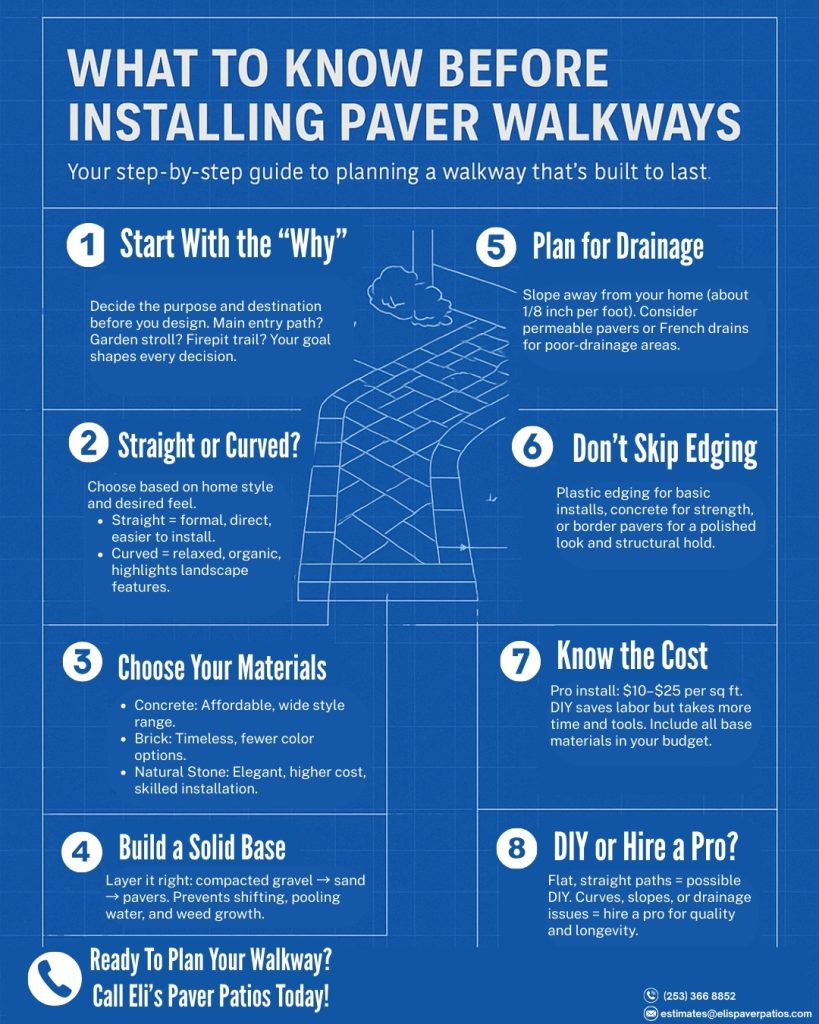
Straight or Curved?
Both options have their place. Straight walkways are clean, direct, and easy to install. Curved paths feel more relaxed and organic. They’re great when you want to slow people down and draw attention to features like a tree, a flower bed, or a sitting area.
If your house is modern or minimalist, straight might match better. If your landscape is more natural, curved usually fits right in.
Just keep in mind that curves take more time, more cuts, and usually more cost. They’re worth it in the right setting, but not always necessary.
Let’s Talk Materials
Not all pavers are created equal. Concrete pavers are the most popular because they’re affordable and come in tons of shapes and colors. Brick pavers offer a timeless look but fewer options. Natural stone? Beautiful, but pricier and trickier to install.
Ask yourself:
- Do you want something bold or subtle?
- Will the walkway match your patio or driveway?
- Are you okay with sealing and upkeep, or do you want something more hands-off?
There’s no wrong answer here. It’s just about what works best for your home and lifestyle.
A Solid Base Is Everything
This is the part you won’t see, but it matters the most.
Under every good paver walkway is a well-prepped base. That usually means digging out the area, adding a few inches of compacted gravel, a layer of sand, and then placing the pavers on top.
Skip this, and you’ll end up with uneven pavers, pooling water, or weeds popping through the cracks.
If you’re thinking of doing it yourself, this is the step where you’ll want to take your time (or consider calling in a pro).
Don’t Ignore Drainage
Water is your walkway’s worst enemy. Without proper slope and drainage, you’ll deal with puddles, erosion, or worse: water heading straight toward your foundation.
The fix is simple: make sure the path has a slight slope (around 1/8 inch per foot) away from your home. In yards with poor drainage, you might need to add a French drain or opt for permeable pavers that allow water to soak through.
It’s not the glamorous part of the project, but it’s one you’ll be glad you handled early.
Edging Keeps Everything in Place
Edging isn’t just about looks. It holds your walkway together.
Plastic edging works fine for basic projects. Concrete edging offers more strength. Want a nice touch? Use border pavers in a contrasting color to frame the walkway and give it a polished finish.
Without edging, even the best-installed pavers can shift over time, especially if your walkway gets a lot of use.
What About Cost?
This one’s tricky because it depends on a lot of factors: size, materials, slope, access, and labor. But here’s a ballpark: most homeowners spend between $10 and $25 per square foot for a professionally installed paver walkway.
If you’re tackling it yourself, you’ll save on labor but might end up spending more time and renting tools. Just be sure to budget for gravel, sand, edging, and paver cuts, not just the surface pavers.
A good contractor should break down all these costs for you upfront.
DIY or Call a Pro?
If you’re handy and have experience with outdoor projects, a straight walkway on flat ground could be a good DIY challenge. But if your yard has curves, slopes, drainage issues, or you just want it done right the first time, it’s smart to hire a pro.
At Eli’s Paver Patios, we work with homeowners who want their projects done with care, not shortcuts. We handle the grading, the drainage, and all the tricky details that can turn a walkway from just okay to something you’ll be proud of. And for added peace of mind, every paver walkway we install comes backed by a 25-year workmanship warranty so you know it’s built to last.
Don’t Forget the Extras
Once the walkway’s in, you can elevate it with a few simple upgrades:
- Lighting: Solar or low-voltage path lights improve safety and make your yard feel more inviting.
- Plants: Low-growing shrubs or flowers along the edge add color and soften the hardscape.
- Texture: Mix different paver sizes or use borders to create contrast.
You don’t need to overdo it, but small touches can go a long way.
Ready to Plan Your Walkway?
Paver walkways are one of the most rewarding upgrades you can make to your yard. They’re functional, attractive, and a clear signal that your home is cared for: inside and out.
But a great walkway doesn’t happen by accident. It takes planning, the right materials, and a solid installation.
If you’re ready to start your project (or just want to explore your options), Eli’s Paver Patios is here to help. We’ll walk your property with you, talk through your ideas, and give you honest feedback on what will work best.
Reach out today to schedule your free consultation. Let’s create something that works for your home and lasts.