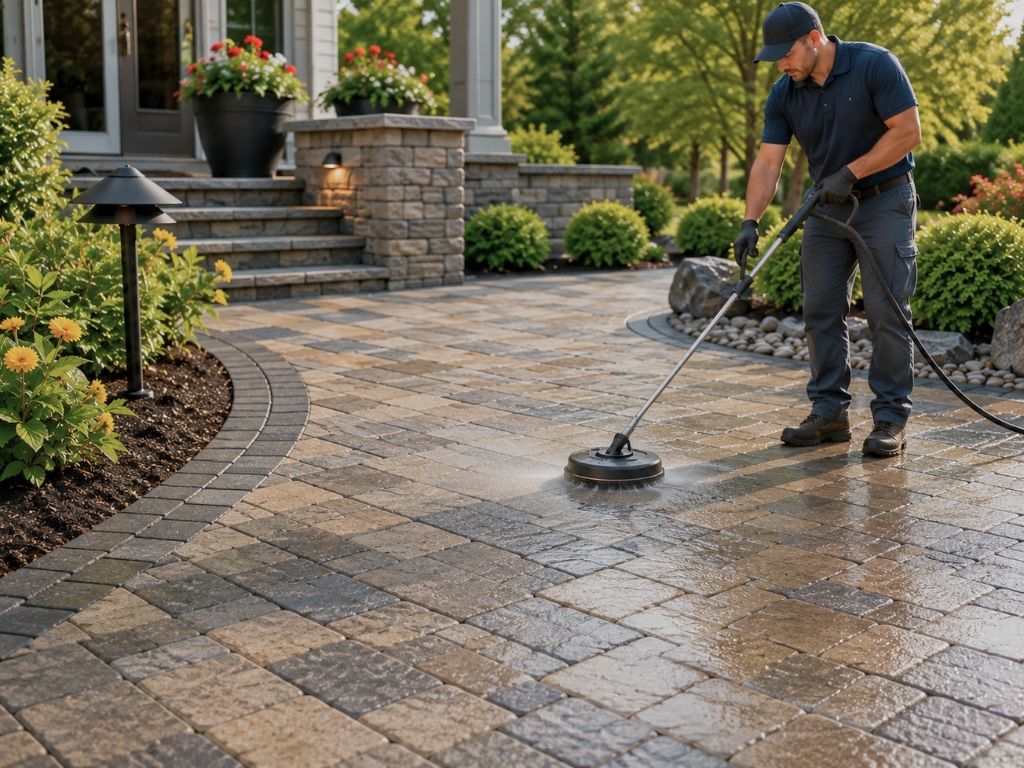
Pavers can completely transform the appearance of a driveway, patio, pool deck, or walkway. However, keeping them clean takes more than spraying them down with a hose every few months.
Many homeowners accidentally damage their pavers while trying to clean them. What starts as simple maintenance can quickly lead to faded surfaces, loose joints, erosion, or permanent stains. In many cases, the wrong cleaning method creates more damage than the dirt itself.
Understanding what not to do is just as important as knowing the proper paver cleaning process. Here are five common paver cleaning mistakes homeowners make that can ruin their outdoor surfaces over time.
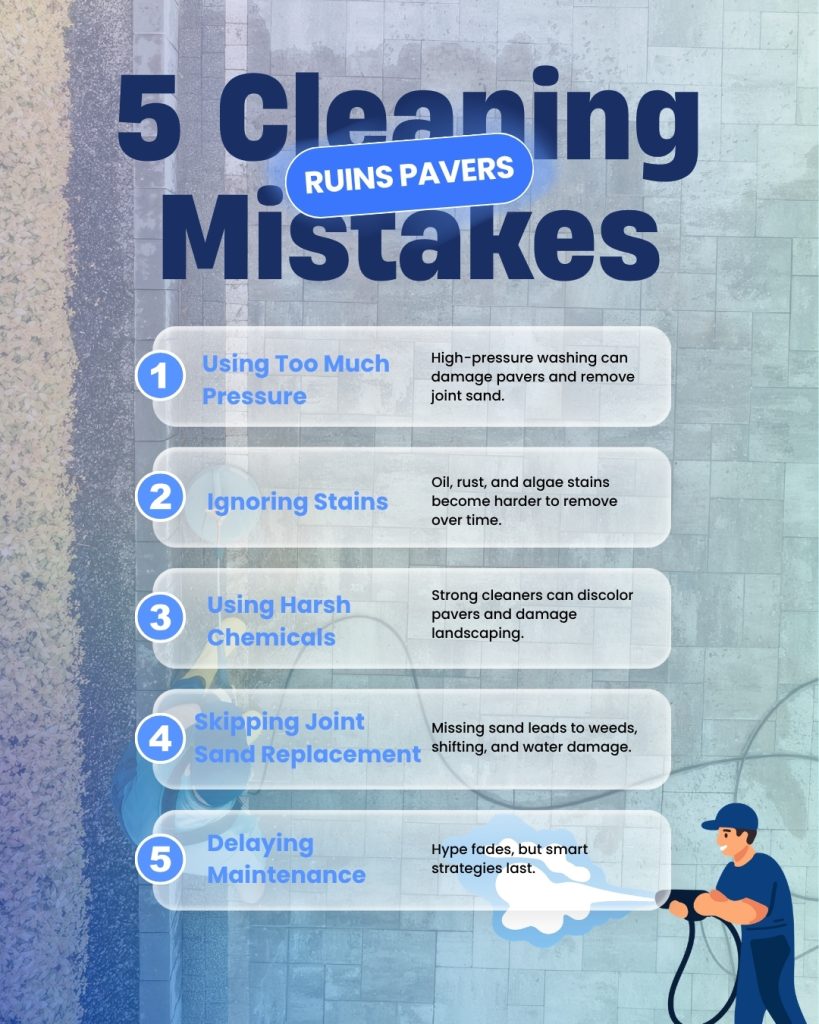
1. Using Too Much Pressure While Washing
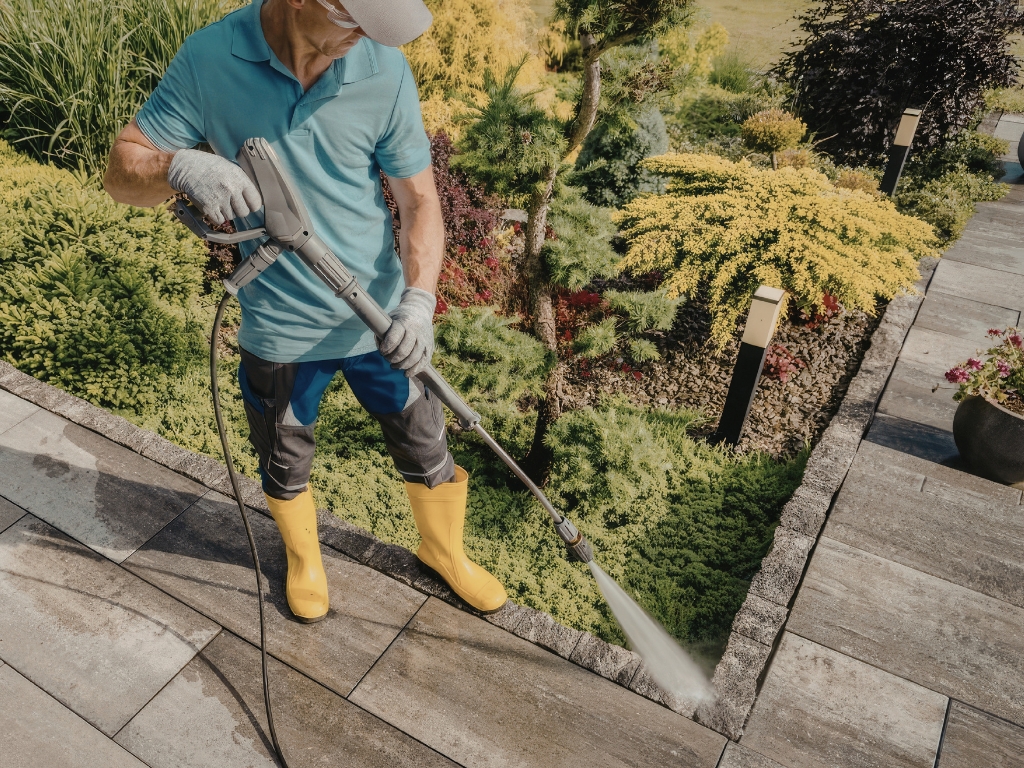
Pressure washing is one of the most effective ways to clean pavers, but excessive pressure can cause serious damage.
Many homeowners assume higher PSI settings will clean faster and produce better results. In reality, aggressive pressure washing can strip the surface layer of the pavers, leave visible marks, and remove the joint sand that helps keep the installation stable.
Once the joint sand washes away, pavers begin shifting and separating. Water can also seep beneath the surface, which increases the risk of erosion and uneven areas.
To avoid damage:
- Use moderate PSI settings
- Keep the nozzle at a safe distance
- Avoid spraying directly into the joints
- Use sweeping motions instead of focusing on one spot too long
If stains are severe, professional paver cleaning may be safer than increasing water pressure.
2. Ignoring Oil, Rust, and Organic Stains Too Long
Small stains often become permanent when left untreated. Oil from vehicles, rust from patio furniture, wet leaves, and BBQ grease can quickly penetrate porous paver surfaces. Many homeowners wait until stains become noticeable across large sections before cleaning them properly.
Organic stains from leaves and algae are especially common. Wet leaves release tannins that leave dark discoloration behind, while algae creates slippery green buildup in shaded areas.
The longer stains sit, the deeper they absorb into the surface.
The best approach is to clean spills and buildup as soon as possible. Different stains may require different cleaning solutions:
- Degreasers for oil stains
- Rust removers for metal stains
- Algae cleaners for moss and mildew
- Mild detergent for general dirt
3. Using Harsh Chemicals That Damage the Surface
Not every cleaning product is safe for pavers. Some homeowners use bleach, acidic cleaners, or strong degreasers without realizing how those chemicals affect the surface. Harsh products can discolor pavers, weaken sealers, and damage nearby grass or landscaping.
Acidic cleaners are especially risky for certain natural stone pavers because they can etch the surface permanently.
Even household products can create problems when mixed incorrectly or used too frequently. Using the wrong product may create fading or staining that cannot be reversed. Before applying any cleaner:
- Test it on a small hidden area first
- Check whether the product is approved for pavers
- Avoid mixing chemicals together
- Rinse the area thoroughly after cleaning
4. Skipping Joint Sand Replacement After Cleaning
One of the most overlooked steps in paver cleaning is replacing the joint sand afterward. Pressure washing often removes some of the sand between the pavers. Many homeowners clean the surface but never refill the joints, which creates long-term stability issues.
Joint sand plays an important role in keeping pavers stable and protected. It helps hold the pavers in place, prevents weed growth, reduces insect activity, and limits water penetration that can weaken the base underneath the surface.
Without proper sand levels, pavers shift more easily and weeds begin growing between the joints. Polymeric sand is commonly recommended because it hardens slightly when activated with water. This creates stronger joints while helping reduce erosion and weed growth.
Re-sanding after cleaning helps protect the entire installation.
5. Waiting Too Long Between Cleanings
Pavers require consistent maintenance throughout the year. Waiting until surfaces look heavily stained or damaged often leads to bigger problems.
Dirt, algae, moisture, and weeds slowly build up over time. Seasonal weather changes also impact pavers differently throughout the year.
For example:
- Spring encourages moss and weed growth
- Summer heat fades paver color
- Fall leaves create organic stains
- Winter moisture increases cracking risks
Routine paver cleaning helps prevent buildup before it becomes severe.
According to the Centers for Disease Control and Prevention (CDC), more than 1 million Americans are injured each year from slip-and-fall accidents, with slippery outdoor surfaces being a major contributing factor. Algae-covered pavers and moisture buildup can quickly create dangerous walking conditions around patios and pool decks.
What Is the Best Way to Clean Pavers?
The best way to clean pavers depends on the type of dirt, stains, and buildup on the surface. However, the safest approach usually combines gentle cleaning methods with consistent maintenance.
Start by sweeping away loose debris like leaves, dirt, and branches. This prevents grime from spreading during washing and helps expose problem areas that need extra attention.
Next, use a paver-safe cleaning solution designed for the type of stain you are dealing with. Mild detergent works well for general dirt, while oil stains, rust, algae, and mold may require specialized cleaners.
Pressure washing can also be effective when done correctly. Use moderate PSI settings and avoid spraying directly into the joints because excessive pressure can remove joint sand and weaken the installation.
After cleaning, inspect the joints for missing polymeric sand. Replacing lost sand helps stabilize the pavers, reduce weed growth, and prevent water penetration.
Applying a quality sealer afterward adds another layer of protection. Sealing helps resist stains, moisture, UV damage, and fading while making future paver cleaning easier.
How Do You Make Pavers Look New Again?
Restoring old pavers usually requires more than basic rinsing. Dirt, algae, stains, and weather exposure slowly dull the surface over time, making pavers look older than they actually are.
Deep cleaning is the first step toward restoration. Pressure washing with the proper cleaning products removes embedded dirt, algae, grease, and organic stains that regular washing cannot eliminate.
Replacing worn or missing joint sand also improves the overall appearance. Empty joints make pavers look neglected and unstable while allowing weeds to grow more easily.
Sealing is another important step when restoring pavers. A quality sealer enhances color, improves stain resistance, and protects the surface from UV damage and moisture. Some sealers create a natural finish, while others produce a darker wet-look appearance.
In cases where pavers are uneven or sunken, lifting and leveling the affected sections may also be necessary. Repairing those areas helps restore both appearance and safety.
With proper cleaning, sanding, and sealing, many faded or stained pavers can look significantly newer without requiring full replacement.
Conclusion
Paver cleaning helps protect the appearance, safety, and lifespan of outdoor surfaces, but the wrong methods can cause costly damage. Mistakes like excessive pressure washing, harsh chemicals, and delayed maintenance often lead to erosion, fading, weed growth, and slippery surfaces.
If your pavers need professional attention, Eli’s Paver Patios provides expert paver cleaning and restoration services to help homeowners keep their outdoor spaces clean, protected, and looking their best year-round.