Your pool is covered, the patio furniture is stacked away and nobody is thinking about swimming. That makes right now the smartest time to look hard at the edge of your pool. Loose, cracked or stained coping is easy to ignore in summer when everyone is in the water. In November it is sitting in plain view, and it is the first thing the winter rain will find.
Pool coping replacement is the job of removing the worn cap around the pool edge and setting new coping on a sound, level bed. In this guide our team at Eli’s Paver Patios walks you through the seven signs that tell you repair is no longer enough, what the replacement process looks like, which materials hold up best, and why booking between November and January gets you a finished pool edge before the first swim of next season.
If you are still getting familiar with the basics, start with our explainer, Swimming Pool Coping: What It Is and Why It Matters for Your Pool Deck. This article picks up where that one leaves off: what to do when your coping is wearing out.
Quick Answer: Repair or Replace Your Pool Coping?
| What you see | What it usually means | Typical next step |
|---|---|---|
| One or two loose coping pieces | The mortar bed under those pieces has let go | Reset and re-mortar those pieces |
| Cracked or missing joint mortar | Water can get behind the coping | Repoint the joints soon, before more pieces loosen |
| Loose pieces in several places around the pool | The bond is failing along the edge, not in one spot | Plan a full pool coping replacement |
| Cracked, chipped or spalling caps | The coping material itself is breaking down | Replace the damaged run, or all of it for a matching look |
| Gaps where the coping meets the deck | Movement between the deck and coping | Inspect the joint and the deck edge, then reset or replace |
| Coping that is uneven, rough or sharp underfoot | A trip and scrape hazard | Replace with a smooth, rounded bullnose coping |
| A deck remodel is already planned | New pavers next to old coping will not match | Replace the coping in the same project |
A good rule of thumb: if you are fixing the same problem every year, or the problems are showing up all the way around the pool, replacement usually costs less over time than chasing repairs piece by piece.
What Does Pool Coping Do, and Why Does It Fail?
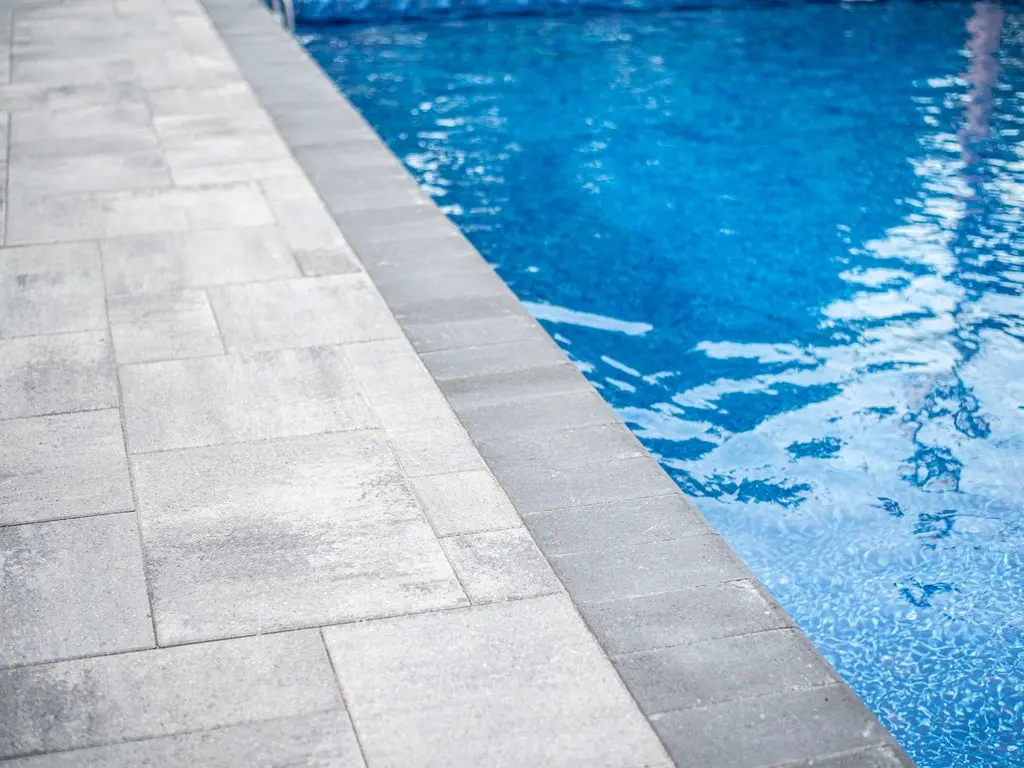
Coping is the cap that finishes the top of the pool wall. It gives swimmers a firm, comfortable edge to hold, it directs splash water away from the pool and onto the deck, and it ties the pool to the surrounding patio. Belgard notes that coping helps a pool or spa hold its shape by keeping the walls straight and rigid.
Coping lives in a tough spot. It is wet most of the swim season, it is splashed with chlorinated or salt water, and it sits right where the pool structure and the deck meet, so any movement between the two shows up there first. In Western Washington, months of winter rain and the odd hard freeze add more stress. Water that gets under a loose piece or into a cracked joint can freeze, expand and push that piece even further out of place.
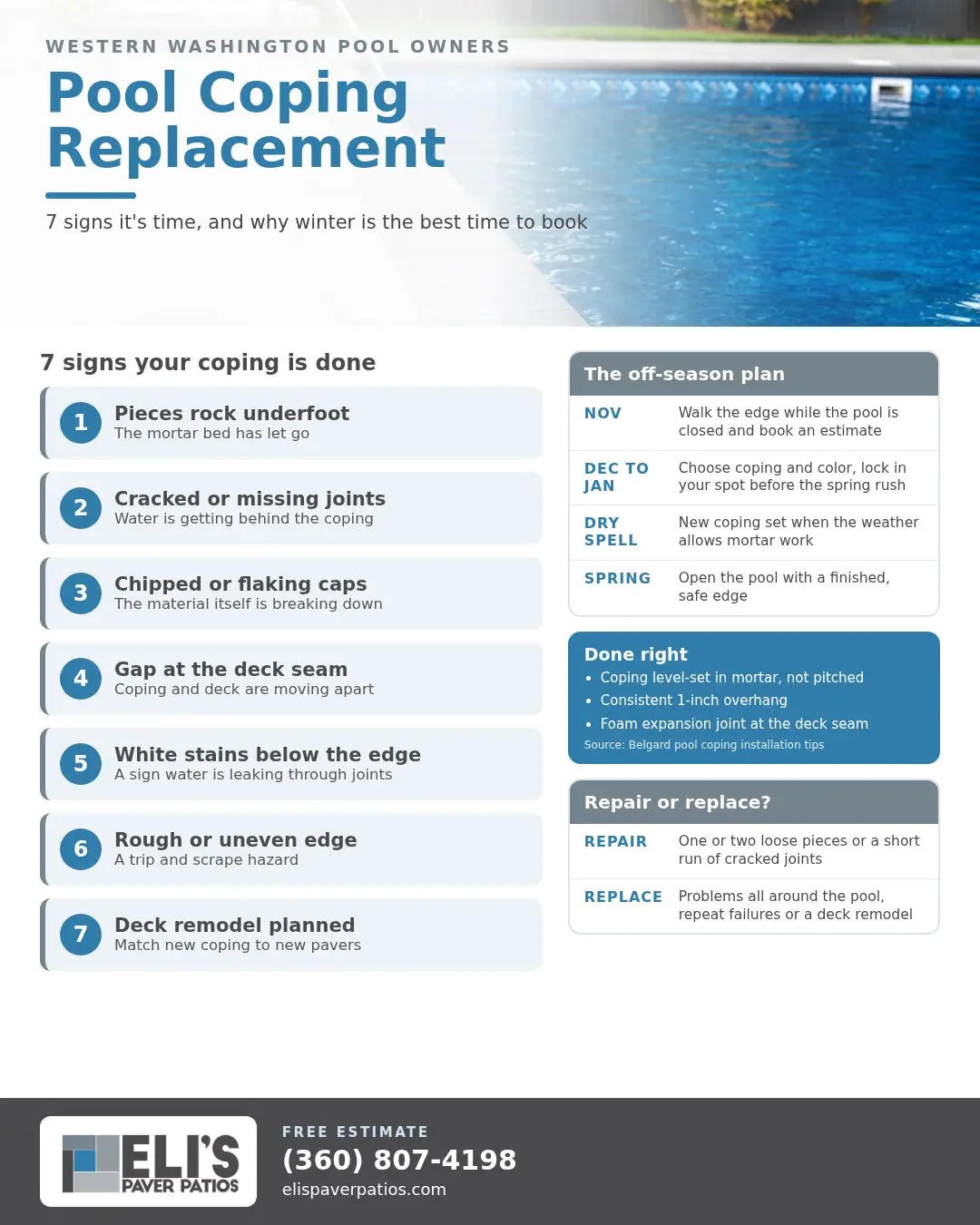
7 Signs It’s Time for Pool Coping Replacement
1. Coping pieces rock or shift when you step on them
Stand on the coping and walk the full perimeter. If pieces wobble, click or move under your feet, the mortar bed underneath has failed. One loose piece can be reset. When you find loose pieces in several spots, the bond is failing along the whole edge and inground pool coping replacement is usually the lasting fix.
2. Mortar joints are cracked, crumbling or missing
The joints between coping pieces, and between the coping and the pool wall, keep water out. Once that mortar cracks or falls out, rain and pool water run straight in behind the coping. Repointing a few joints is routine maintenance. Repointing that never seems to stay put is a sign that the coping underneath is moving.
3. Caps are cracked, chipped or flaking
Look for hairline cracks across individual pieces, broken corners and a surface that is flaking or pitting. Older poured concrete coping in particular can crack along its length as it ages. Once the material itself is breaking down, resetting it will not bring it back, and concrete pool coping replacement with new units is the practical option.
4. There is a growing gap between the coping and the deck
A widening line where the deck meets the coping tells you the two are moving separately. Water that runs into that gap can wash out the base under the deck edge. This is one reason Belgard recommends a foam expansion joint between the coping and the pavers to protect the bond seam. If your pool was finished without one, a replacement is the time to add it.
5. White crusty stains or water marks on the pool wall below the coping
Chalky white deposits just below the coping often mean water has been travelling through a joint and drying on the surface. Treat it as a leak warning, not a cleaning problem. It is worth finding the source before the next swim season.
6. The edge is rough, sharp or a trip hazard
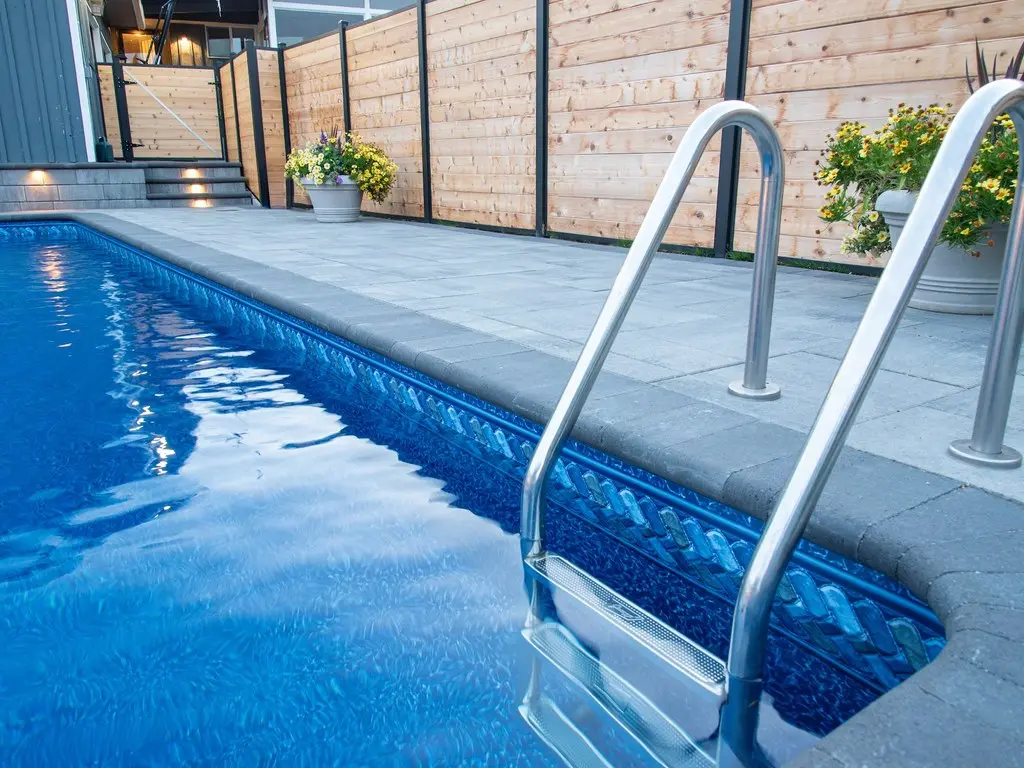
Coping is the surface swimmers sit on, push off from and climb out over. Uneven pieces, raised lips and rough or chipped edges scrape knees and catch toes. Smooth, rounded bullnose coping is made for this spot. Belgard says the rounded edges protect feet and hands in pools and on steps.
7. You are remodeling the pool deck or the coping simply looks dated
If you are planning new pavers around the pool, replacing the coping in the same project gives you one matched, finished look and avoids pulling up new pavers later to reach old coping. Faded or mismatched coping next to a fresh deck stands out, even when the old coping is still sound.
Can Pool Coping Be Repaired Instead of Replaced?
Often, yes. Repair makes sense when the damage is limited: a few loose pieces, a short run of cracked joints or a single broken cap. We reset those pieces on fresh mortar and repoint the joints, the same way we handle other paver repairs.
Repair stops making sense when:
- Loose or cracked pieces show up all around the pool, not in one area.
- The same section has been repaired before and failed again.
- The coping material is cracking or flaking, not just the mortar.
- Matching replacement pieces are no longer available, so repairs stand out.
- You are already redoing the deck next to it.
During an estimate we walk the full perimeter with you and tell you honestly which side of that line your pool is on.
What Does Swimming Pool Coping Replacement Involve?
Every pool is different, but a typical swimming pool coping replacement follows the same steps:
- Inspection and plan. We check every piece, the joints, the deck edge and the pool wall top, and agree on the coping style and color with you.
- Protecting the pool. The water is lowered below the work area as needed, and the pool finish, liner or cover track is protected before demolition.
- Removing the old coping. Old pieces and mortar are taken off carefully so the top of the pool wall is not damaged.
- Preparing the edge. The top of the wall is cleaned and any damaged areas are addressed so the new coping has a solid, level surface.
- Setting new coping. Following Belgard’s guidance, coping units are level-set with mortar, not pitched, because the deck itself carries the slope, with a consistent 1-inch overhang over the water.
- Joints and the deck seam. Joints are finished, and foam expansion material goes between the coping and the deck pavers to protect the seam.
- Final walkthrough. We walk the finished edge with you before we call the job complete.
If your pool has an automatic cover, the track needs special care. Belgard’s installation tip is to use construction adhesive on the track portion rather than mortar, and mortar on the back side of the track.
What Is the Best Material for Pool Coping Replacement?
For most Western Washington pools we recommend concrete paver coping. Belgard describes concrete pavers as a great choice for coping because of their durability, chlorine and salt resistance and natural, slip-resistant, stone-like finish. Our own pool decks use pavers and sealers that resist chlorine and saltwater.
A few Belgard coping options we often show homeowners:
| Belgard coping | What stands out | Sizes listed by Belgard |
|---|---|---|
| Bullnose Coping | Smooth surface with a rounded edge, can be laid back to back for a two-sided cap | 4 x 9 x 2 3/8 in. |
| Marina Coping | Classic bullnose look for straight or curved edges, color runs through each unit | 4 x 12 x 2 3/8 in. and 6 x 12 x 2 3/8 in. |
Belgard lists a lifetime transferable limited warranty on both. Because the color is integrated through each unit, a small chip does not reveal a different color underneath the way a painted or coated surface can. To talk through coping and deck paver options in person, visit one of our showrooms in Olympia, Tacoma or Vancouver.
Why Is the Off-Season the Best Time to Book?
In Western Washington, most pools are closed from fall to late spring. That gives you a natural window to get the edge fixed without losing a single swim day. Here is why booking between November and January works in your favor:
- Nobody is using the pool. The work does not interrupt your summer, and the water can be lowered without affecting your plans.
- Problems are easy to see. With the pool quiet, it is easy to walk the edge and spot every loose piece and open joint before winter rain gets into them.
- You stop the damage from spreading. Each wet winter puts more water into open joints. Fixing them sooner keeps a small repair from turning into a bigger one.
- You get your preferred spot in the schedule. Spring is the busiest season for outdoor projects. Booking now means your design, color choice and start date are settled before the rush.
- Your pool is ready when the weather turns. Planning in winter means the new coping is in place before you open the pool for the season.
Mortar work does need suitable weather, so on rainy or freezing days we schedule around conditions. Booking early gives us room to pick the right dry stretch for your project instead of squeezing it in during the spring rush.
How Can You Protect New Pool Coping?
Once your new coping is in, a little care keeps it looking sharp for years:
- Walk the perimeter at the start and end of each swim season and look for open joints or loose pieces.
- Keep the deck and coping seam clear of debris so water can drain.
- Rinse off pool chemicals and splash residue, and avoid harsh cleaners on the coping.
- Ask about sealing. Our guide to the paver sealing timeline explains when new pavers should be sealed and resealed.
- Let a professional handle it. Our year-round paver maintenance program covers inspections, cleaning and repairs so small issues get caught early.
Questions to Ask Before You Hire a Coping Contractor
Before you sign, ask any contractor:
- Will you walk the whole perimeter with me and explain what needs repair and what needs replacement?
- What coping products do you recommend, and what warranty comes with them?
- How will you protect my pool liner, finish or cover track during the work?
- Will you add an expansion joint between the coping and the deck?
- How will the new coping match or tie into my existing pool deck?
- How do you schedule around rain and freezing weather?
Frequently Asked Questions
How do I know if my pool coping needs replacing?
Walk the edge and look for loose or rocking pieces, cracked or missing mortar, chipped or flaking caps, gaps between the coping and the deck, and white stains on the pool wall below the coping. If those problems appear in several places around the pool, replacement is usually the better long-term fix.
Can you replace pool coping without replacing the whole pool deck?
Yes. Coping can be replaced on its own, as long as the deck edge next to it is sound. If you are planning a deck upgrade anyway, doing both together gives you a matched look and avoids disturbing new pavers later.
Can you replace coping on a vinyl liner pool?
Yes, but the liner and its track need careful protection during removal and setting. Ask your contractor how they will protect the liner before work starts.
What is the best coping for a pool in Western Washington?
We usually recommend concrete paver coping with a smooth bullnose edge. Belgard notes concrete pavers resist chlorine and salt, and their bullnose coping units have rounded edges that protect hands and feet.
Is winter a good time to replace pool coping?
Yes. With the pool closed, the work does not cost you any swim time, you can stop water from getting into open joints, and you lock in your spot before the spring rush. We schedule the mortar work around rain and freezing days.
Will new coping match my existing pavers?
Belgard designs its coping to pair with its pavers and walls, so in most cases we can find a coordinating color and style. Bring photos of your deck to one of our showrooms and we will help you compare options.
Book Your Pool Coping Replacement This Winter
If your coping is loose, cracked or simply worn out, now is the time to get it on the schedule. Our team brings more than 100 years of combined experience to every pool deck we build, and we will give you a straight answer on whether a repair will do or a full replacement makes more sense.
Call Eli’s Paver Patios at (360) 807-4198 or request a quote and learn more about our pool paver installation services. Book this winter and your new pool edge will be ready before your first swim of the season.