Porcelain pavers are often sold as a low-maintenance outdoor surface. That is true, but it can also be misleading.
Low maintenance does not mean no maintenance.
If you recently installed porcelain pavers or are considering them for your patio, pool deck, walkway, or outdoor kitchen, you need to know how to care for them the right way. These pavers are durable, stain-resistant, and easy to clean, but small mistakes can still affect how they look and perform over time.
The good news is simple: maintaining porcelain pavers does not require much work. It just requires the right habits.
Why Are Porcelain Pavers Easier to Maintain?
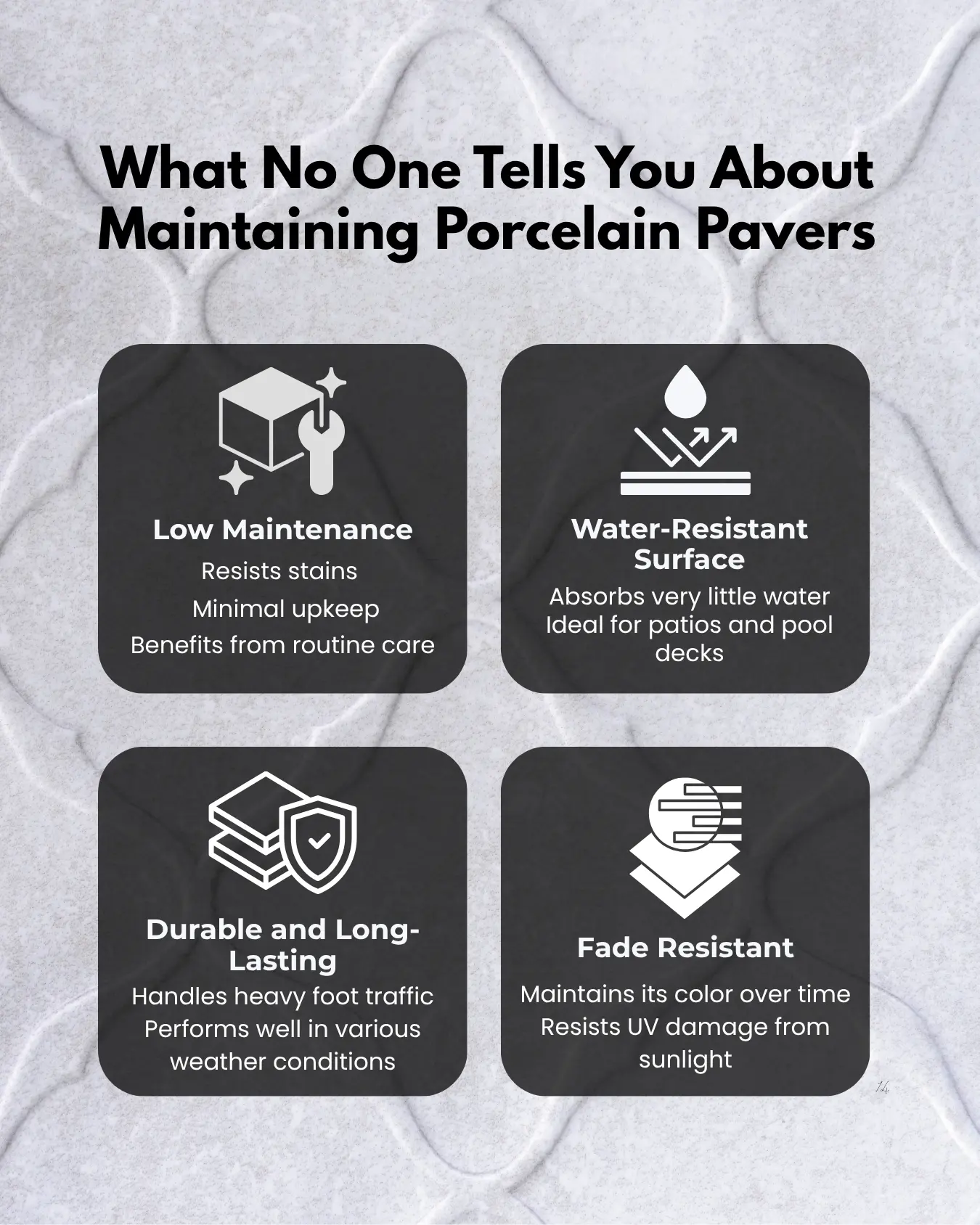
Porcelain pavers are different from concrete, brick, and many natural stone surfaces. They are made from refined clay and fired at high temperatures, creating a dense, hard surface that resists moisture, fading, and everyday wear.
According to the American National Standards Institute, certified porcelain tile must have a water absorption rate of 0.5% or less when tested according to ASTM C373. This is why porcelain performs well outdoors and resists many common moisture-related issues.
That low absorption rate is one of the biggest reasons homeowners choose porcelain pavers. Spills are less likely to soak into the surface. Rain is less likely to cause damage. Dirt does not cling as deeply as it can with more porous materials.
However, the surface beneath and around the pavers is just as important. The base, joints, slope, and drainage all affect long-term performance.
The Biggest Myth: Porcelain Pavers Clean Themselves
Porcelain pavers are easy to clean, but they are not self-cleaning.
Dust, pollen, leaves, food spills, and outdoor debris can still collect on the surface. If you ignore that buildup, your pavers may start to look dull or dirty, especially in shaded areas or spaces near trees.
Basic cleaning is usually enough.
Sweep your pavers regularly to remove loose debris. Rinse them with water when dirt starts to collect. For deeper cleaning, use a mild detergent with warm water and a soft-bristle brush.
Avoid harsh chemicals unless the manufacturer recommends them. You should also avoid abrasive pads because they can affect the surface finish.
Are Porcelain Pavers Waterproof?
Porcelain pavers are highly water-resistant, but “waterproof” can be a tricky word.
The paver itself absorbs very little water. This makes porcelain a strong choice for patios, pool surrounds, walkways, and outdoor living areas exposed to rain or irrigation. However, waterproof pavers do not fix poor installation.
If the area underneath the pavers has bad drainage, water can still collect around the installation. If the patio was not graded correctly, standing water may form on the surface. Over time, this can affect joints, create slippery areas, or lead to shifting beneath the pavers.
So, are porcelain pavers waterproof? The material is highly water-resistant in everyday outdoor conditions, but the full installation still requires proper slope, drainage, and joint care.
The Joints Need Attention Too
Many homeowners focus only on the paver surface. The joints between the pavers are just as important.
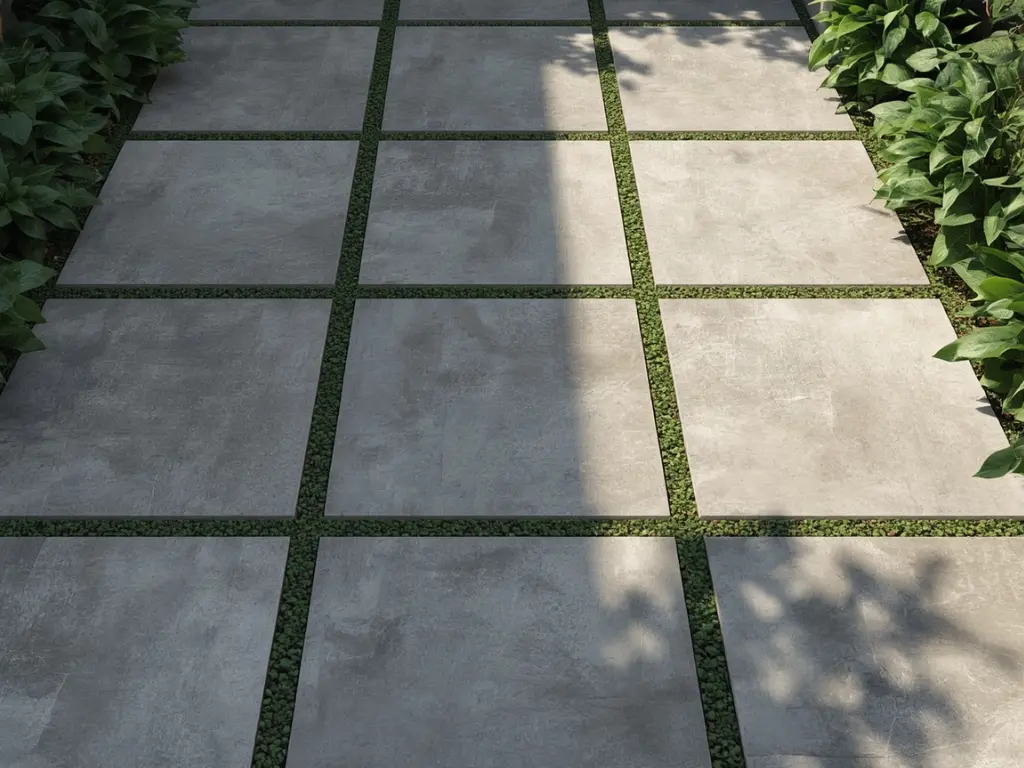
Joints can collect dirt, seeds, and organic debris. Over time, weeds may grow between pavers if the joint material breaks down. Ants and insects may also disturb loose material in some outdoor spaces.
This does not mean porcelain pavers are hard to maintain. It just means you should inspect the joints a few times a year.
Look for gaps, loose material, weeds, or areas where water collects. If the joint material has washed away, it may need to be refreshed. Keeping the joints stable helps the entire surface look cleaner and last longer.
Stains Are Easier to Remove When You Act Fast
Porcelain pavers resist staining better than many outdoor materials, but stains can still happen. Common outdoor stains include:
- Grease from grills
- Wine, coffee, or soda spills
- Rust from metal furniture
- Leaf stains
- Dirt from planters
The key is timing.
Clean spills as soon as possible. Most fresh spills can be removed with water, mild soap, and a soft brush. Grease may require a pH-neutral cleaner designed for porcelain or outdoor tile.
Avoid letting organic debris sit for long periods, especially wet leaves. Even if the porcelain does not absorb much moisture, debris can leave marks on the surface or in the joints.
Pressure Washing Can Help, But Be Careful
Pressure washing porcelain pavers can be useful when dirt, algae, or outdoor buildup becomes noticeable. It can refresh a patio quickly when done correctly.
The problem is that many homeowners use too much pressure.
High pressure can disturb joint material, damage surrounding landscaping, or force water into areas where it should not go. Use a low to moderate setting and keep the nozzle moving. Avoid holding the spray too close to the pavers.
If you are unsure, test a small area first. For routine maintenance, a garden hose and mild cleaner are often enough.
Seasonal Maintenance Makes a Difference
Porcelain pavers are designed to withstand the elements, but a little seasonal maintenance can help keep them looking their best year after year. Adjusting your care routine based on the season can prevent dirt buildup, staining, and drainage issues before they become larger problems.
Spring
- Sweep away pollen, dirt, and debris that accumulated during winter.
- Inspect the surface for loose joints or shifting pavers.
- Check drainage areas to ensure water flows away properly.
Summer
- Clean up food, grease, and beverage spills after outdoor gatherings.
- Rinse away pool chemicals, sunscreen, or salt residue if the pavers surround a pool.
- Remove dirt and dust regularly to maintain the pavers’ appearance.
Fall
- Clear leaves and organic debris before they begin to decompose.
- Inspect joints for weed growth and remove weeds promptly.
- Wash away stains caused by wet leaves or landscaping materials.
Winter
- Remove snow using plastic shovels or tools that won’t scratch the surface.
- Avoid harsh de-icing products unless they are approved for nearby materials.
- Monitor for standing water that could indicate drainage issues.
When to Call a Professional
Most porcelain paver maintenance is simple. However, some issues need expert attention. Call a professional if you notice standing water, shifting pavers, uneven sections, recurring weed problems, or joint material that keeps washing out. These signs may point to a base, drainage, or installation issue.
If your porcelain pavers are showing signs of wear or drainage issues, Eli’s Paver Patios can help restore their beauty and performance. Contact our team today to schedule a consultation and keep your outdoor space looking its best.
Final Thoughts
Porcelain pavers are one of the easiest outdoor surfaces to maintain, but they still need care. Regular sweeping, gentle washing, quick stain cleanup, joint inspections, and proper drainage all help protect your investment.
The real secret is consistency.
You do not need a complicated maintenance routine. You just need to pay attention before small issues become bigger ones.
When was the last time you checked your porcelain pavers closely?