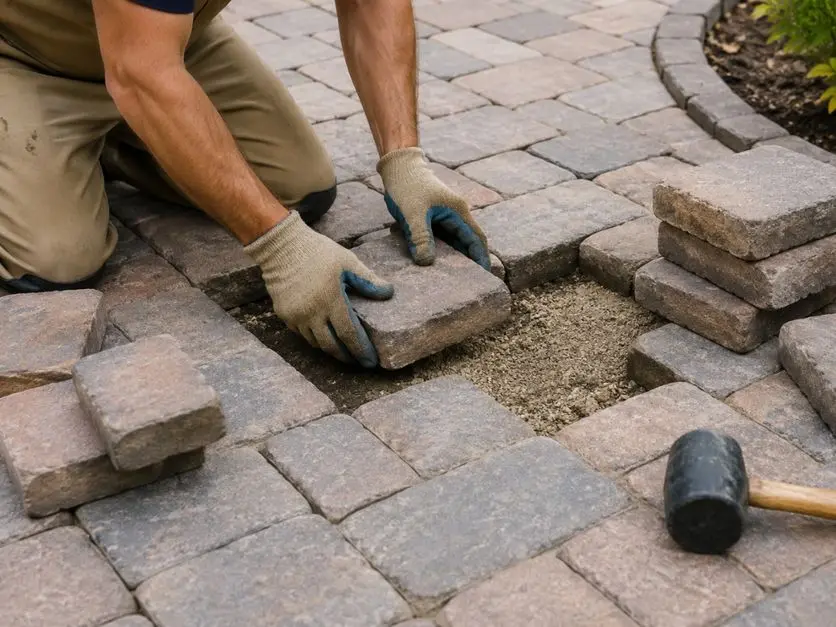
According to the National Association of Realtors (NAR), 97% of Realtors® believe curb appeal is important in attracting a buyer. This highlights the value of front yard improvements for homeowners looking to enhance their property’s appearance and value.
However, improving curb appeal can be challenging when you have a small front yard. Many homeowners worry that adding a walkway will take up valuable space and make the area feel even more cramped.
In reality, the right walkway design can have the opposite effect. A thoughtfully planned walkway paver installation not only improves visual appeal but also creates a greater sense of openness, helping you make the most of every square foot.
Why Walkway Design Matters in Small Front Yards
The walkway is often one of the first features visitors notice when approaching your home. In a small yard, every design choice matters. A poorly planned path can overwhelm the landscape, while the right design creates balance, flow, and a more welcoming entrance.
Small front yards often present challenges such as limited planting space, narrow property lines, and awkward layouts. The key is choosing a walkway design that complements these constraints rather than competing with them. Factors such as paver size, layout, color, and width all play a role in how spacious your yard feels.
If you’re planning a new walkway, our Complete Guide to Paver Walkway Installation covers everything from design considerations and material selection to installation steps and maintenance tips.
When designed properly, a walkway guides visitors naturally to your front door while making the yard feel larger, more functional, and more inviting.
Choosing the Right Walkway Width
One of the most common mistakes homeowners make is installing a walkway that is too wide for the available space. While a broad pathway may seem impressive, it can consume valuable landscape area and make a small yard appear crowded.
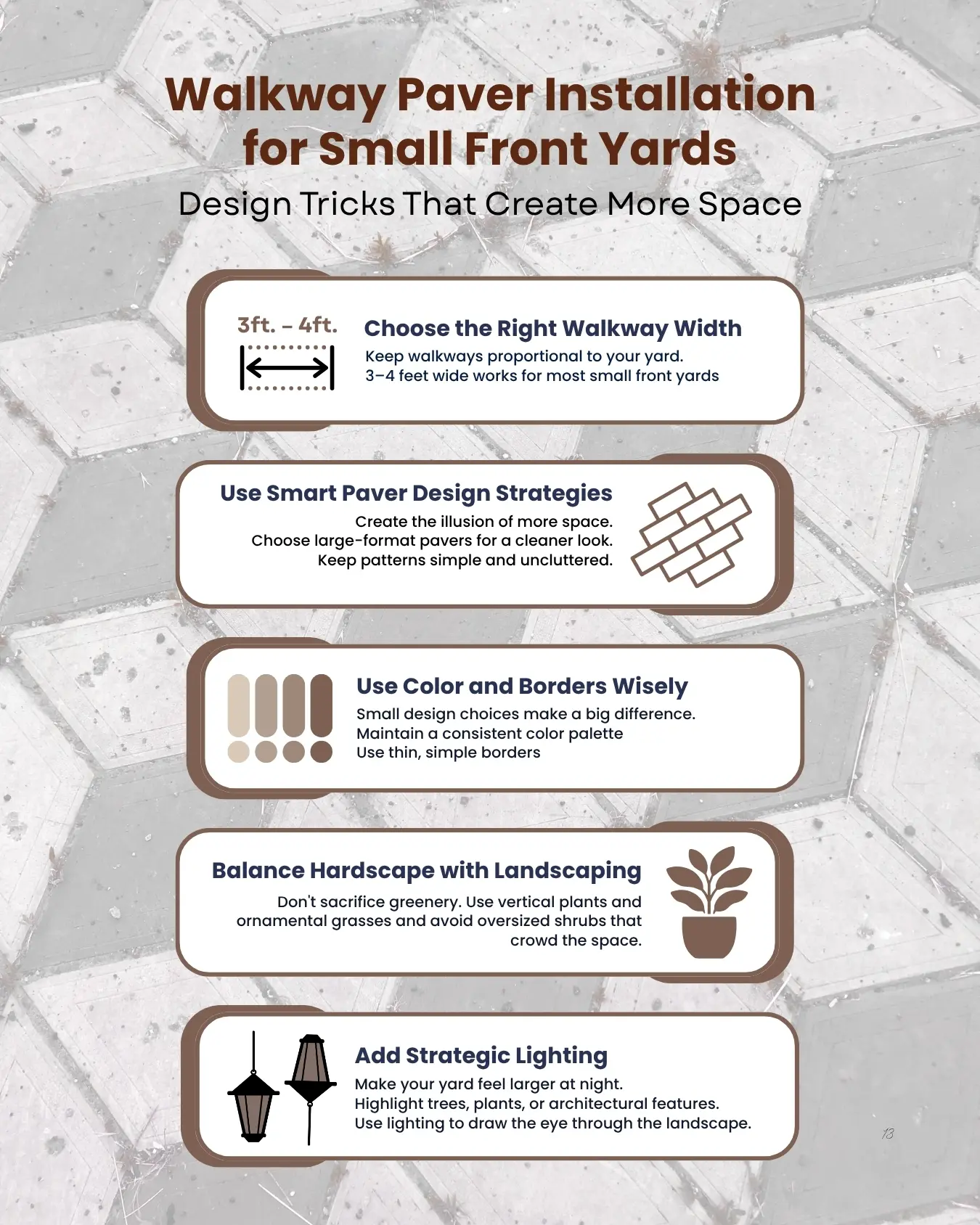
For most small front yards, a walkway width of 3 to 4 feet is ideal. A 3-foot-wide walkway comfortably accommodates a single person, while a 4-foot-wide walkway allows two people to walk side by side without feeling cramped. These dimensions provide adequate functionality while preserving space for landscaping and other design elements.
If your front yard is particularly compact, widths narrower than 3 feet can feel restrictive and may not provide a welcoming entry experience. On the other hand, walkways wider than 5 feet can quickly dominate a small yard and reduce the visual impact of surrounding plants and lawn areas.
That said, wider walkways may be appropriate in certain situations. Homes with frequent visitor traffic, larger front entrances, or accessibility needs often benefit from pathways measuring 5 to 6 feet wide.
Walkway Paver Installation Design Strategies That Create More Space
Several design techniques can help maximize the appearance of space during a walkway paver installation.
Gentle curves often work well in small front yards because they guide the eye through the landscape rather than drawing attention to property boundaries. Curved pathways create movement and visual interest while making the yard feel deeper than it actually is.
Simple layouts are equally important. Complex patterns, multiple transitions, and excessive decorative elements can make a compact space feel cluttered. Clean, streamlined designs tend to create a more open appearance.
Another effective strategy is extending the visual journey to the front door. By incorporating subtle curves or focal points, you can make the pathway feel longer and more engaging without increasing its actual footprint.
-
Use Gentle Curves to Create Visual Depth
A slightly curved walkway can visually enlarge the space by encouraging the eye to move through the landscape rather than stopping at the front door. When visitors see a gentle curve, they naturally follow the path visually, creating a sense of depth and distance.
For example, instead of installing a straight 20-foot walkway from the sidewalk to the entrance, a subtle curve around a flower bed or ornamental tree can make the journey feel longer and more interesting. This design approach works particularly well in front yards that are wider than they are deep.
The key is moderation. Sharp curves or winding pathways can feel forced in a small space and may reduce usable lawn or planting areas. A gentle bend is usually enough to create the desired effect while maintaining functionality.
-
Choose Large-Format Pavers
Large-format pavers help create a cleaner and more open appearance because they reduce the number of visible joints in the walkway. Fewer lines and interruptions allow the eye to move smoothly across the surface, which can make the area appear more open.
For example, a walkway built with 24-inch by 24-inch pavers will generally appear less busy than one constructed with numerous small 6-inch by 6-inch pavers. The larger units create a simpler visual pattern that complements compact landscapes.
Large pavers also contribute to a more modern design aesthetic. They pair well with contemporary homes and can make narrow walkways feel more substantial without requiring additional width. If you prefer a traditional style, rectangular pavers laid in a running bond pattern can offer a similar sense of openness while maintaining a classic appearance.
-
Use Color to Enhance Perceived Space
Color plays an important role in how spacious a landscape feels. Lighter colors tend to reflect more light, which can make surfaces appear larger and more open. Darker materials often absorb light and may make a compact space feel more enclosed.
For small front yards, colors such as light gray, beige, cream, and soft tan can help create a brighter and more inviting environment. These shades also blend well with most home exteriors and landscaping elements.
For example, a light gray paver walkway surrounded by green lawn and shrubs will often feel more expansive than a dark charcoal walkway in the same setting. The lighter surface creates visual contrast without overwhelming the space.
Consistency is equally important. Using several competing colors throughout the walkway, border, and landscaping can create visual fragmentation. A cohesive palette allows the landscape to flow naturally and helps the yard appear larger than it actually is.
-
Incorporate Borders Strategically
Borders can add structure and visual interest to a walkway, but they should be used carefully in smaller landscapes. The purpose of a border is to frame the walkway and provide definition, not to become the focal point.
A simple contrasting border that is 4 to 6 inches wide is often sufficient. For example, a tan paver walkway with a narrow charcoal border can add subtle character without overwhelming the design.
Problems arise when borders become too elaborate. Multiple border colors, intricate patterns, or oversized accent bands can draw excessive attention to the walkway itself. This can make a small yard feel busier and more confined.
In most cases, simple borders provide the best balance between visual appeal and spatial efficiency. They help organize the design while maintaining a clean and uncluttered appearance.
-
Maximize Green Space Around the Walkway
One of the easiest ways to make a front yard feel more expansive is to avoid covering too much of it with hardscape. While walkways are essential, they should work alongside landscaping rather than replace it.
Leaving room for planting beds creates contrast between hard and soft elements. This balance helps soften the appearance of the walkway and adds layers of visual interest. Strategic landscaping can also guide the eye beyond the path, making the yard feel more expansive.
For example, instead of planting large shrubs that spread several feet wide, consider ornamental grasses, upright evergreens, or flowering perennials with a vertical growth habit. These plants add height and texture without consuming valuable square footage.
Ground covers, low-growing flowers, and neatly defined planting beds can further enhance the appearance of the space. When thoughtfully arranged, landscaping helps the walkway blend into the overall design rather than dominate it.
-
Lighting Techniques That Enhance Spaciousness
The way a front yard is illuminated can significantly affect how large it feels after sunset. Proper lighting adds depth, highlights key features, and improves safety without creating visual clutter.
Low-profile pathway lights are often the best choice for small front yards. Fixtures placed every 6 to 8 feet along the walkway provide guidance while maintaining a clean look. Oversized fixtures can overwhelm the landscape and make the area feel crowded.
Accent lighting can also be used to draw attention to focal points such as a decorative tree, architectural column, or front entryway. By illuminating features beyond the walkway, you encourage the eye to travel through the landscape, creating a stronger sense of depth.
For example, a small Japanese maple highlighted with uplighting near the front entrance can make the yard feel larger by extending visual interest beyond the path itself. Layered lighting techniques create dimension and help maximize the perceived size of the space during evening hours.
Conclusion
Before beginning your next project, take a close look at your front yard. What simple design change could help transform your space into something that feels larger, more attractive, and more enjoyable every day?
Ready to transform your small front yard into a welcoming, spacious entrance? Eli’s Paver Patios designs and installs custom paver walkways that maximize curb appeal while making the most of every square foot. Contact us today to schedule your consultation.